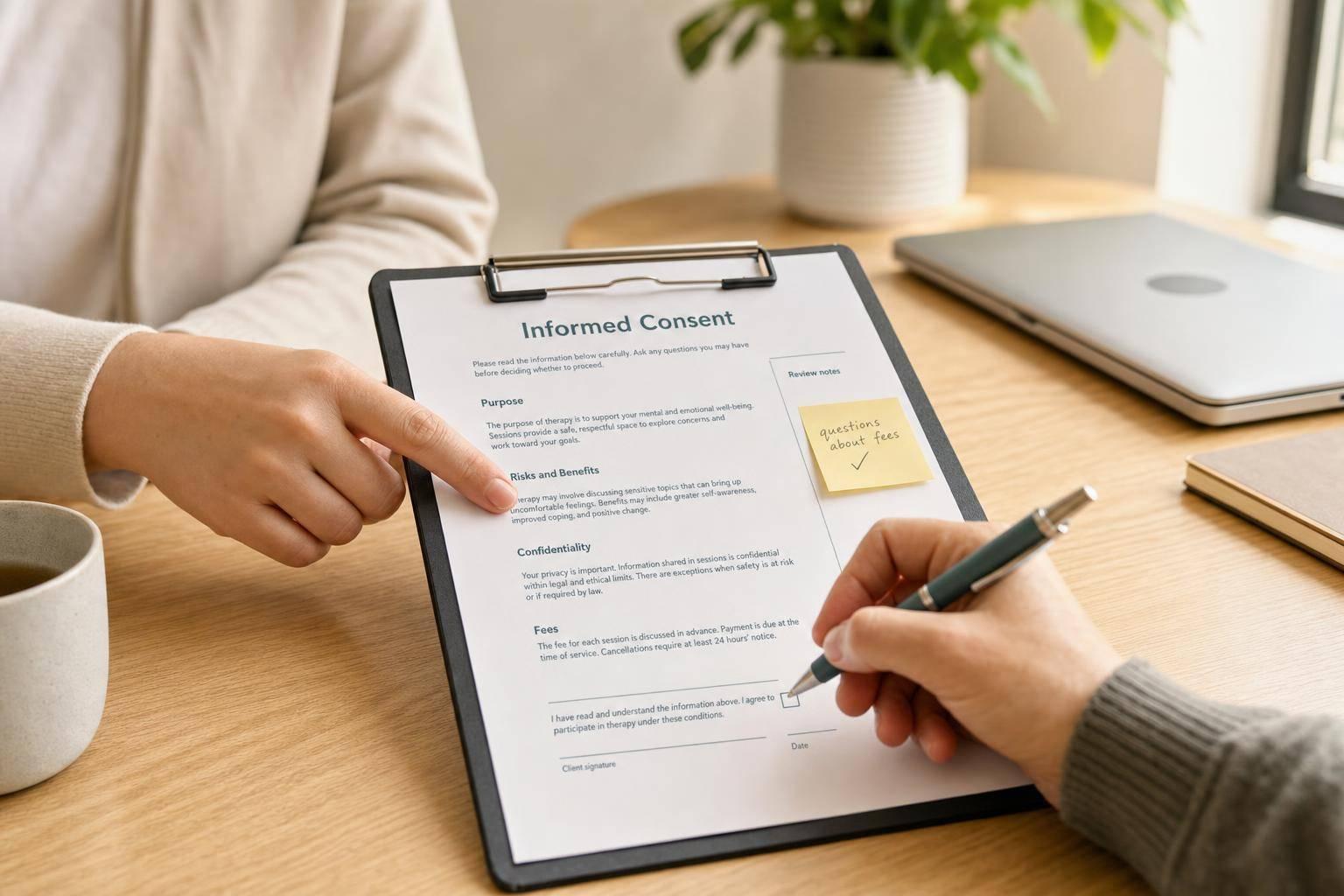
Informed Consent Generator for Modern Practice
Creating a strong informed consent document takes more than dropping treatment details into a template. Patients need clear, readable information about what a service involves, why it’s being recommended, what the expected benefits may be, and what risks or alternatives should be considered. This Informed Consent Generator helps healthcare, therapy, and wellness providers build a thoughtful first draft that follows a logical structure without sounding cold or overly technical.
Built for Different Provider Types
Whether you work in mental health, physical treatment, integrative care, or elective services, the tool adapts the draft to fit the situation. It can include general confidentiality language where appropriate, bodywork-specific communication notes, and expectation-setting language for cosmetic or non-essential treatments.
A Practical Starting Point, Not a Substitute for Review
A good informed consent generator can save time and improve consistency, but it shouldn’t replace professional judgment or local compliance review. That’s why this tool is designed to support drafting, not to make legal claims. You can use it to create a cleaner, more complete consent form draft, then refine the language based on your scope of practice, documentation standards, and jurisdiction-specific requirements.
FAQs
Does this tool create a legally final informed consent form?
No. This tool is designed for drafting and educational use only. It gives you a well-structured starting point based on the information you provide, but informed consent requirements can vary by state, region, profession, and treatment type. Before using any document in practice, it should be reviewed and adapted for local legal, regulatory, licensing, and professional standards.
Can it work for both healthcare and wellness services?
Yes. The tool is built to support a wide range of providers, including medical, therapy, rehab, bodywork, nutrition, wellness, and elective or cosmetic services. It adjusts the draft based on the service context—for example, adding general confidentiality language for mental health settings, or language about reporting discomfort and stopping treatment for physical or body-based services.
What kind of information should I prepare before using it?
You’ll get the best result if you already know the basics of the service you want to describe: what it is, why it’s being offered, likely benefits, common and serious risks, alternatives, who should avoid it, and what may happen if it’s declined. If relevant, it also helps to have notes on treatment frequency, privacy limits, and when a patient should seek urgent care. The more specific your inputs are, the more useful and realistic the first draft will be.