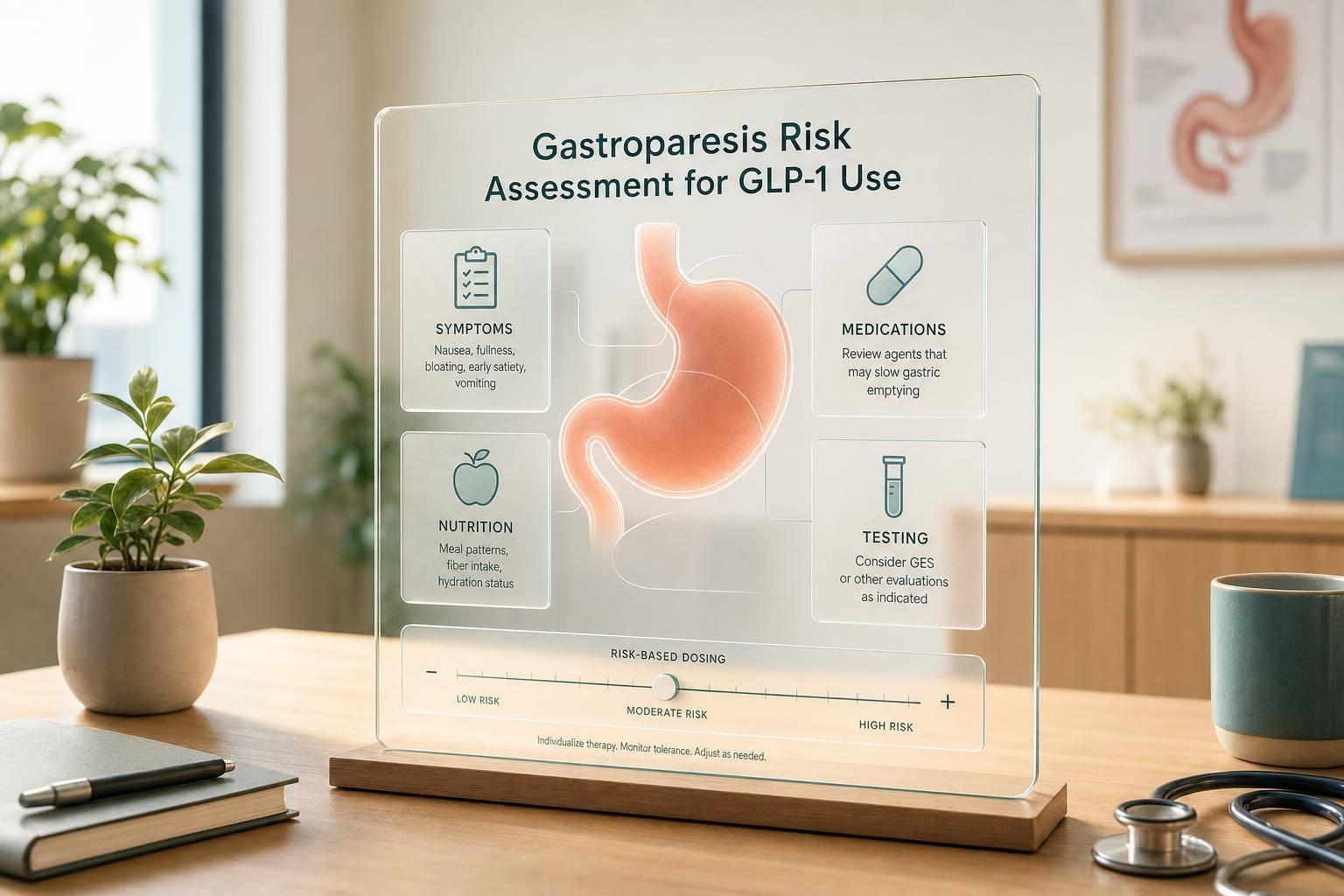
If I’m prescribing peptide therapy like a GLP-1, I should screen for gastroparesis first. These drugs slow stomach emptying, so a patient with baseline nausea, vomiting, early satiety, poor intake, or prior retained stomach contents may do worse after starting treatment.
Here’s the short version:
- Start with symptoms: nausea, vomiting, fullness, bloating, reflux, pain, dysphagia, constipation, and diarrhea
- Look for stop signs: vomiting several times a week, liquid-only intake, 5%–10% unplanned weight loss, aspiration history, or prior nutrition support
- Check risk conditions: diabetes, hypothyroidism, Parkinson disease, connective tissue disease, prior gastric or bariatric surgery, or a known motility disorder
- Review meds that slow the gut: opioids, anticholinergics, TCAs, pramlintide, octreotide, calcium channel blockers, and current or recent GLP-1 use
- Use prior tests: gastric emptying studies, endoscopy with retained food after fasting, imaging, and labs like HbA1c, TSH, electrolytes, albumin, B12, folate, and iron
- Assess nutrition before prescribing: low intake, poor protein intake, soft or liquid diet, BMI near or below 18.5 kg/m², or micronutrient gaps all matter
- Risk-stratify the plan: standard start for low risk, slower dose increases for mid-risk, and defer GLP-1 plus GI review for high risk
A few numbers help frame the issue. In EMR-based U.S. data, diabetic gastroparesis made up 57.4% of recorded cases. On gastric emptying scintigraphy, more than 10% retention at 4 hours supports delayed emptying. And in one study of 69 GLP-1 users, 72% had low calcium intake, 64% had low iron intake, and only 1.4% met vitamin D targets.
| Risk level | What I’d expect | What I’d do |
|---|---|---|
| Low | Mild or no GI symptoms, stable weight, no proof of delayed emptying | Start GLP-1 with standard titration |
| Moderate | Intermittent nausea, early satiety, minor weight change, unclear prior testing | Start more slowly and follow up in 2–4 weeks |
| High | Daily nausea, frequent vomiting, aspiration risk, retained gastric contents, malnutrition, or proven gastroparesis | Hold off, get GI input, and look at other options |
Bottom line: I’d treat this as a before-you-prescribe checklist, not an afterthought. The goal is simple: spot patients who can start safely, spot those who need a slower plan, and spot those who need more workup first.
Checklist 1: Patient history and symptom screen
Use this checklist during the pre-prescribing visit to record baseline motility risk. The goal is simple: separate symptoms the patient already has from warning signs that may point to a bigger problem before prescribing.
Upper GI symptom checklist
Start by documenting the symptom pattern. Then sort routine GI complaints from signs that suggest a motility issue.
For each symptom marked positive, note when it started, how often it happens, how severe it is, whether it relates to meals, and how much it affects daily life.
| Symptom | Present? | Notes (onset, frequency, severity, timing relative to meals) |
|---|---|---|
| Nausea | Yes / No | |
| Vomiting (especially of undigested food) | Yes / No | |
| Early satiety | Yes / No | |
| Postprandial fullness | Yes / No | |
| Bloating | Yes / No | |
| Visible abdominal distention | Yes / No | |
| Reflux or regurgitation | Yes / No | |
| Upper abdominal pain or discomfort | Yes / No | |
| Dysphagia | Yes / No | |
| Constipation | Yes / No | |
| Diarrhea | Yes / No |
Symptoms that start 1–3 hours after meals, especially after solid or high-fat meals, point more strongly to delayed gastric emptying than discomfort that happens right after eating.
Also document baseline bowel habits, including usual stool frequency and any back-and-forth pattern between constipation and diarrhea. GLP-1 agents can worsen colonic dysmotility, and that often shows up alongside gastroparesis, so it helps to have a clear baseline before treatment starts.
Red flags, comorbidities, and prior GI events
These findings put a patient in a higher-risk group and call for a closer look before moving ahead.
Screen for these red-flag symptoms:
- Vomiting multiple times per week or requiring emergency department or urgent care
- Liquid-only intake or near-zero intake for 24–48 hours
- Unintentional weight loss of ≥5–10% body weight over 3–6 months
- Any history of aspiration, nocturnal regurgitation, choking with meals, or aspiration pneumonia
- Prior IV fluids, NG tube, or parenteral nutrition for GI symptoms
Screen for these comorbidities linked to impaired gastric motility:
- Diabetes (type 1 or type 2) - document duration, current HbA1c, and any signs of autonomic neuropathy such as orthostatic hypotension, resting tachycardia, or erectile dysfunction; in U.S. electronic medical record–based studies, diabetic gastroparesis represents 57.4% of recorded gastroparesis cases
- Hypothyroidism - note treatment status and most recent TSH
- Parkinson disease or other neurodegenerative conditions - note diagnosis duration and current neurologic medications
- Connective tissue disease (e.g., scleroderma, lupus) - smooth muscle involvement can cause severe GI dysmotility
- Prior gastric or bariatric surgery - include procedure type (sleeve gastrectomy, Roux-en-Y gastric bypass, fundoplication, pyloroplasty, antrectomy), date, and any known complications
- Known motility disorder - document prior diagnosis, current prokinetic or antiemetic use, and baseline symptom control
Prior GI events to capture:
- Number of GI-related emergency department or urgent care visits in the past 12–24 months (0 / 1 / 2–3 / ≥4)
- Endoscopy findings: retained food after standard fasting (≥8 hours), aborted or limited procedure due to gastric contents, or large-volume suctioning required
- Anesthesia records noting "full stomach", aspiration risk, or rapid-sequence induction due to suspected delayed emptying
- Gastric emptying study: normal / mildly, moderately, or severely delayed / not done
Record the patient’s risk level here, then move to the physical exam, medication review, and prior testing. After that, confirm exam findings and medication factors that may slow gastric emptying even more.
sbb-itb-7164bd9
Checklist 2: Physical exam, medication review, and prior testing
After symptom history and red flags, use the exam, medication list, and past testing to judge baseline motility risk and whether a GLP-1 is a good fit.
Physical exam and objective risk indicators
Keep the exam short and systematic. Document weight, BMI, and any recent change. Check blood pressure and pulse in both supine and standing positions. Orthostatic changes can point to dehydration, autonomic neuropathy, or both. Also note hydration status, including dry mucous membranes, poor skin turgor, sunken eyes, or low urine output.
On the abdominal exam, look for upper abdominal distention, visible peristalsis, tympany, and mild tenderness without peritoneal signs. Hypoactive bowel sounds fit delayed motility. High-pitched, tinkling sounds lean more toward obstruction, and that needs to be ruled out before blaming symptoms on gastroparesis. A succussion splash can suggest retained gastric contents hours after a meal.
Document signs of malnutrition directly. That includes temporal muscle wasting, loss of subcutaneous fat, edema, poor dentition, glossitis, or brittle hair and nails. Also check for surgical scars that fit prior gastric or bariatric procedures. Then look for Parkinsonian features, diabetic neuropathy, autoimmune stigmata, or other neurologic clues that may point to a cause of dysmotility.
If prior point-of-care ultrasound (POCUS) data are available, review them here. Solid gastric contents or clear fluid volume above 1.5 mL/kg means high aspiration risk.
Then move to the medication review.
Medication review for agents that slow gastric motility
This step helps separate drug-induced delayed emptying from intrinsic gastroparesis. Before starting a GLP-1, check for concurrent use of the following:
| Medication Class | Common Examples | Action Before Starting GLP-1 |
|---|---|---|
| GLP-1 / dual agonists | Semaglutide, liraglutide, dulaglutide, tirzepatide, exenatide | Document current or recent use, dose, duration, and relation to symptom onset |
| Opioid analgesics | Morphine, oxycodone, hydrocodone, fentanyl, methadone | Reduce or substitute before GLP-1 when feasible |
| Anticholinergics | Diphenhydramine, bladder antispasmodics, some antispasmodic GI drugs | Review need; consider alternatives |
| Tricyclic antidepressants | Amitriptyline, nortriptyline | Note dose; consider switching if motility symptoms are present |
| Other motility-slowing agents | Calcium channel blockers, pramlintide, octreotide, aluminum antacids, L-dopa | Flag and assess symptom correlation |
Look for symptom improvement after dose reduction or discontinuation. If the picture is still murky, don't add a GLP-1 yet. Get clear on the cause first.
Next, use prior testing to sort out whether the delay was already there or may be drug-related.
Prior testing and lab review
Pull prior GES, EGD, imaging, and labs into one place. Then check whether any of them point to a reversible cause.
For gastric emptying scintigraphy (GES), record the 4-hour solid-meal retention. Normal retention is 0% to 10% at 4 hours. Retention above 10% supports delayed emptying. Severity grades help you judge how careful to be with prescribing:
- Grade 1 (mild): 11% to 20% retention at 4 hours
- Grade 2 (moderate): 21% to 35% retention at 4 hours
- Grade 3 (severe): 36% to 50% retention at 4 hours
- Grade 4 (very severe): more than 50% retention at 4 hours
Also confirm the study was performed off GLP-1s, opioids, and prokinetics. If not, the result may be harder to interpret.
For upper endoscopy, note retained food or liquid after proper fasting, along with any structural abnormality such as pyloric stenosis, ulcers, tumors, or strictures. Retained food on EGD supports delayed emptying, but it does not replace scintigraphy. If prior CT or MRI is available, note gastric distention, obstruction, masses, or postsurgical anatomy that could explain symptoms or suggest mechanical obstruction.
Record HbA1c, fasting glucose, CMP, TSH/free T4, electrolytes, albumin, prealbumin, B12, folate, and iron studies. Poor glycemic control, hypothyroidism, and electrolyte abnormalities can worsen motility. Also record any positive autoimmune or neurologic workups already in the chart, since those findings place the patient in a higher-risk group.
Checklist 3: Nutrition status and treatment suitability
After you review motility causes and medication effects, the next step is simple: figure out whether the patient can handle MORE appetite suppression from GLP-1 therapy. If someone already has low intake, recent weight loss, or a dehydration risk, slower gastric emptying can push them downhill fast.
Weight history and oral intake tolerance
Start with recent weight trend. A loss of ≥5% of body weight in 1 month or ≥10% in 6 months is a meaningful clinical warning sign, especially if it was unplanned. Then look at current BMI. A BMI near or below 18.5 kg/m² points to high risk for added nutrition problems.
Next, ask what the patient is actually eating day to day. Be direct. Some patients are already getting by on small meals, soft foods, or liquid shakes because that’s all they can tolerate. That matters. It tells you their gastric tolerance is already limited before treatment even starts.
Pay close attention to:
- Whether solids are harder to tolerate than liquids
- Whether early satiety is already cutting intake short
- A 24-hour intake estimate, with portion sizes and unfinished meals
Patients who are consistently eating below about 1,200–1,500 kcal/day for women or 1,500–1,800 kcal/day for men should be viewed as moderate- to high-risk before prescribing.
If intake is already low, don’t stop at calories. Check protein intake, micronutrient status, and whether the patient depends on supplements to get through the day.
Malnutrition risk and prescribing considerations
Calories are only part of the picture. Protein intake and micronutrient status matter just as much. During weight loss, aim for at least 1.0 g/kg/day of protein. Some patients need more - up to 1.6 g/kg/day in older adults or in those at risk for sarcopenia. If the patient has a history of malnutrition, uses oral nutrition supplements, or needs enteral support, treat that as high risk.
Micronutrient gaps also show up often in GLP-1 users, especially with calcium, iron, and vitamin D. In a food-record study of 69 GLP-1 users, 72% consumed less than the recommended amount of calcium, 64% were low in iron, and only 1.4% met vitamin D recommendations. That’s a big red flag, especially in patients whose intake is already thin.
For patients at higher risk - especially older adults, those with prior bariatric surgery, or anyone reporting a very restricted diet - consider baseline labs before starting: vitamin D, B12, iron studies, folate, and thiamine. If major deficiencies are already there, correct those first. Then hold off on aggressive titration until intake and labs improve.
Use the features below to sort nutrition risk before prescribing:
| Feature | Lower Risk | Higher Risk |
|---|---|---|
| BMI and weight trend | Stable, overweight/obese range | Trending underweight, rapid unintentional loss |
| Daily caloric intake | Meets estimated needs | Chronically below estimated needs |
| Solid food tolerance | Tolerates regular meals | Relies on soft, pureed, or liquid diet |
| Early satiety | Absent or mild | Present at baseline |
| Protein intake | Meets target intake | Consistently below target |
| Micronutrient status | No known deficiencies | Documented deficits or high-risk pattern |
| Supplemental nutrition | Not needed | Using oral supplements or enteral support |
For higher-risk patients, stabilize nutrition first, bring in a dietitian, set protein and hydration goals, and delay or slow GLP-1 titration. Then use those findings to place the patient into a low-, moderate-, or high-risk prescribing pathway.
Risk stratification, follow-up planning, and key takeaways
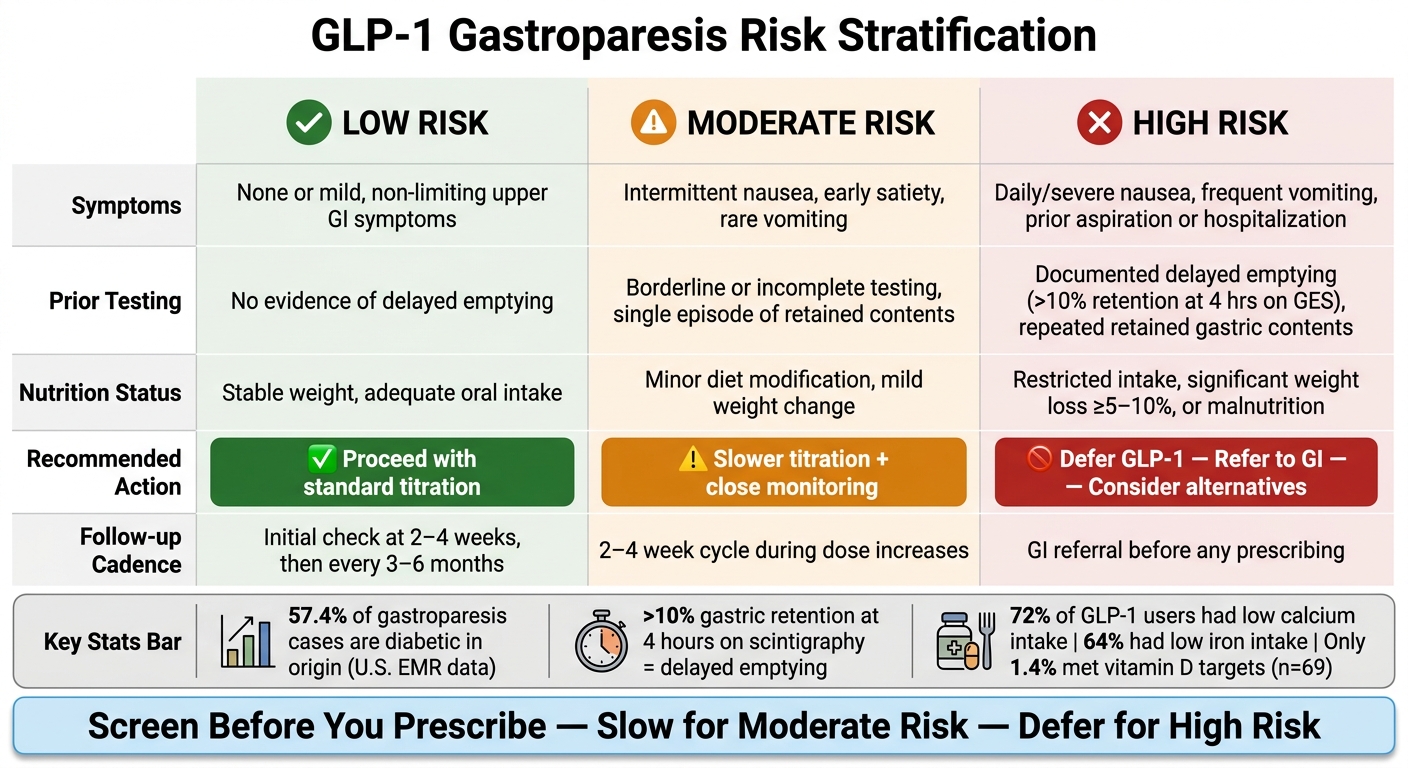
GLP-1 Gastroparesis Risk Stratification: Low vs Moderate vs High Risk
Low-, moderate-, and high-risk prescribing pathways
Use the completed checklist to place patients into low, moderate, or high gastroparesis risk before prescribing. Look at the full picture: symptoms, exam findings, medication review, prior testing, and nutrition status. A single data point usually doesn't tell the whole story.
| Risk Category | Symptoms | Prior Testing | Nutrition Concerns | Recommended Action |
|---|---|---|---|---|
| Low | None or mild, non-limiting upper GI symptoms | No evidence of delayed emptying | Stable weight, adequate oral intake | Proceed with standard titration |
| Moderate | Intermittent nausea, early satiety, rare vomiting | Borderline or incomplete testing, single episode of retained contents | Minor diet modification, mild weight change | Slower titration, close monitoring |
| High | Daily/severe nausea, frequent vomiting, prior aspiration or hospitalization | Documented delayed emptying, repeated previous evidence of retained gastric contents | Restricted intake, significant weight loss, or malnutrition | Defer GLP-1, refer to GI, consider alternatives |
In plain terms, the more objective abnormalities you find, the more cautious the prescribing path should be.
Follow-up schedule and peri-procedural precautions
Once risk is assigned, set the follow-up cadence right away. For low-risk patients, an initial check at 2–4 weeks is usually enough to review nausea, bowel habits, hydration, and weight trend. After that, maintenance visits every 3–6 months are reasonable.
Moderate-risk patients need closer contact, especially during dose increases. A 2–4 week follow-up cycle helps track oral intake, signs of dehydration such as orthostasis or reduced urine output, and whether symptoms are starting to affect day-to-day function. At maintenance visits, document GI symptom trends, weight trajectory, and hydration status so you can decide whether to continue, lower the dose, or stop treatment.
If a patient is heading into sedation or anesthesia, add a separate pre-op review. Some centers use longer fasting for solids - up to 24 hours - for symptomatic or high-risk patients. Some guidance also suggests holding weekly GLP-1 doses for about 1 week before high-risk procedures, or holding daily formulations on the day of the procedure. In the anesthesia pre-op assessment, clearly flag GLP-1 use, upper GI symptoms, and any known gastroparesis. If delayed emptying is a concern, point-of-care gastric ultrasound may help.
Key points and practice implementation
A standardized pre-prescribing checklist is the simplest way to use this framework across your patient panel. It should cover symptom history, physical exam, medication review, prior GI testing, nutrition status, and a documented follow-up plan.
The day-to-day approach is simple:
- Screen before prescribing
- Slow titration when risk is moderate
- Defer therapy when risk is high
That kind of structure helps keep decisions consistent, especially when cases fall into the gray area between “probably fine” and “needs a closer look.”
FAQs
Who should not start a GLP-1 right away?
Do not start a GLP-1 right away in patients with a history of medullary thyroid carcinoma (MTC) or MEN 2. The same goes for patients with severe gastroparesis or major chronic gastrointestinal motility disorders.
You should also delay starting treatment in patients with a history of pancreatitis and assess them before initiation.
When should I order a gastric emptying study?
Order a gastric emptying study when a patient has severe or persistent upper GI symptoms linked to GLP-1 therapy that point to clinically meaningful delayed gastric emptying.
This matters most when the patient has:
- Severe nausea or vomiting
- Symptoms that are getting worse
- Symptoms that don’t improve after a dose adjustment
Move even sooner if the patient has a history of gastroparesis or tends to have high GI sensitivity.
And if symptoms last past the brief titration period after a dose change, escalate the workup instead of pushing the dose higher. At that point, increasing the dose can add fuel to the fire.
How do I tell if low intake makes GLP-1 use unsafe?
Assess symptoms with the CTCAE grading scale. Grade 2 nausea with reduced oral intake means you should pause dose increases until symptoms improve to Grade 1.
Watch for warning signs:
- Inability to pass stool or gas for more than 48 hours
- Intractable vomiting
- Persistent GI symptoms despite dose reduction
- Inability to maintain oral hydration
These require immediate clinical contact.