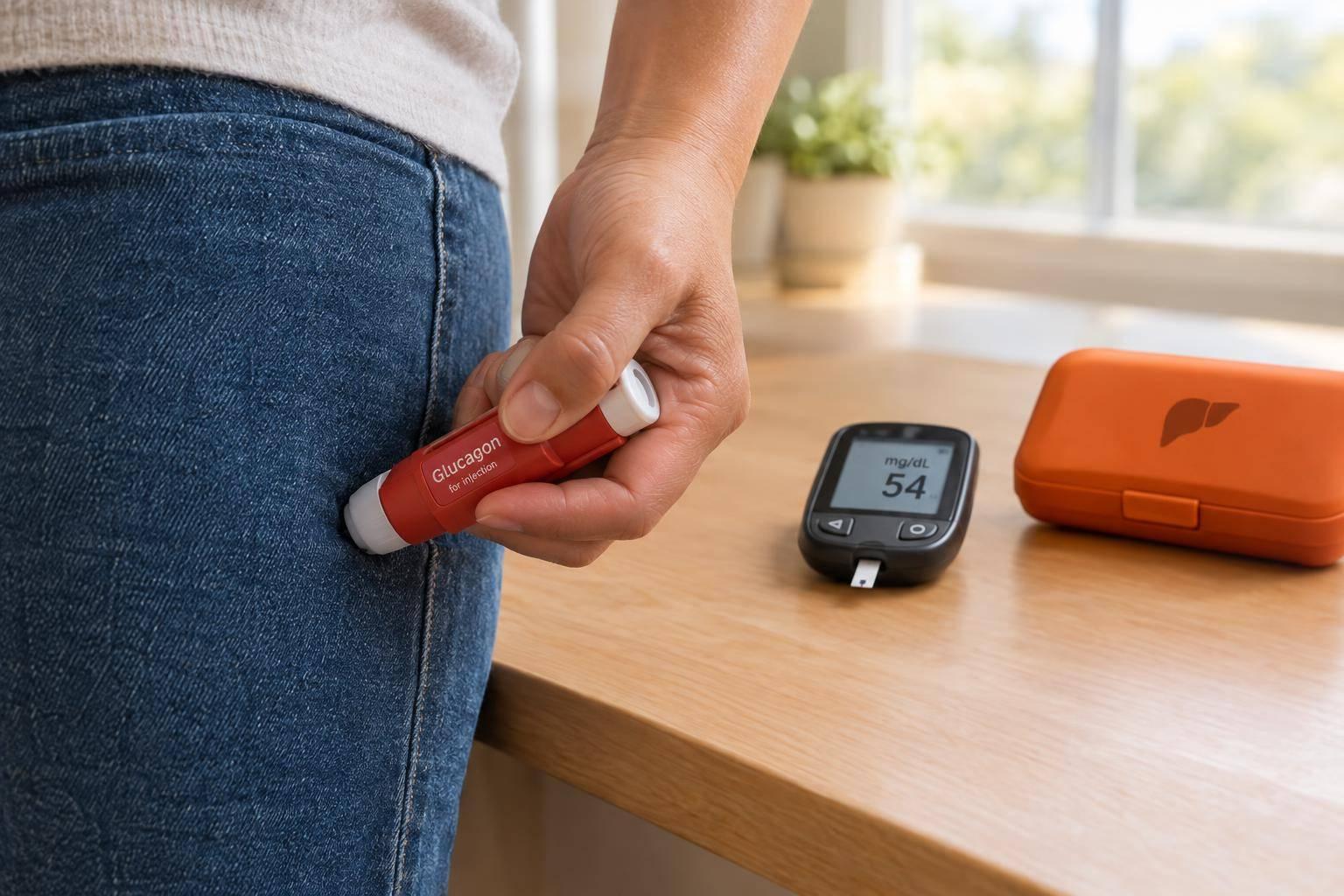
Glucagon treats severe low blood sugar by telling the liver to release stored glucose - not by supplying glucose itself. If someone cannot safely swallow, give prescribed glucagon as directed and call 911 immediately afterward.
Here’s what determines the response:
- Liver signaling: Glucagon activates the cAMP–PKA pathway, which starts breaking down stored glycogen.
- Available glycogen: Fasting, poor nutrition, repeated lows, or liver disease can limit the glucose released. Making new glucose through gluconeogenesis cannot reliably replace those stores during an emergency.
- Follow-up care: Follow the specific product’s instructions. Some allow another dose after 15 minutes without a response. Persistent low glucose may need IV dextrose from emergency clinicians.
Never give food or drink until the person is alert and can swallow safely. Once swallowing is safe, give carbohydrate as directed and keep monitoring - even if the person seems recovered.
Biochemistry of blood sugar regulation & glucose homeostasis
sbb-itb-7164bd9
Step 1: Trace Glucagon Signaling in the Liver
How Glucagon Releases Stored Glucose From the Liver
Activate the Glucagon Receptor and cAMP Pathway
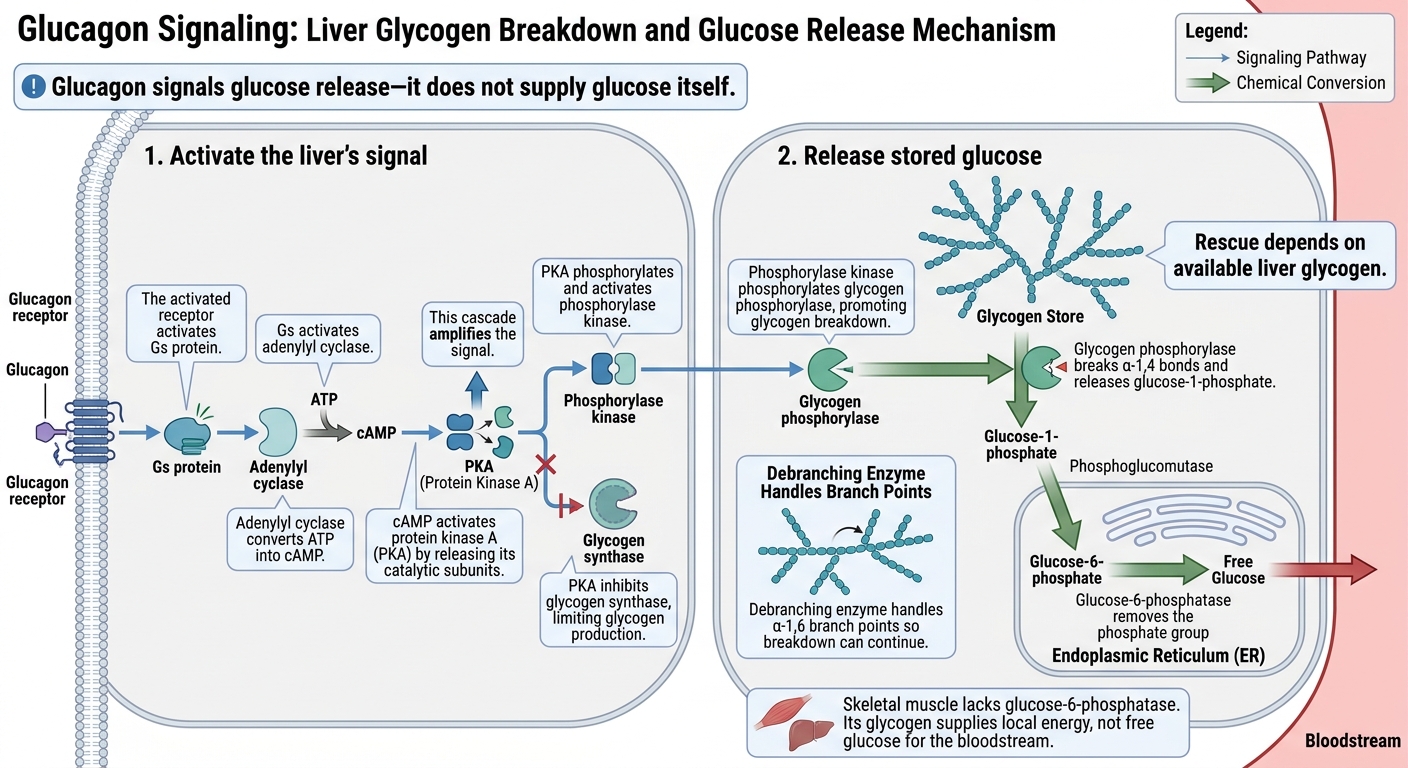
Glucagon rescue depends on liver glycogen. To release glucose from those stores, glucagon first binds to a G protein-coupled receptor on a liver cell. That binding starts the pathway that triggers glycogen breakdown, a process central to peptide therapeutics.
| Signaling step | Cellular target | Effect |
|---|---|---|
| Glucagon binds | Hepatocyte glucagon receptor | Activates the receptor |
| Receptor activation | Gs protein | Activates Gs, which activates adenylyl cyclase |
| Gs signaling | Adenylyl cyclase | Converts ATP into cAMP |
| cAMP increases | Protein kinase A (PKA) | Activates PKA by releasing its catalytic subunits |
| PKA phosphorylates | Phosphorylase kinase | Activates this enzyme |
| Phosphorylase kinase phosphorylates | Glycogen phosphorylase | Promotes glycogen breakdown |
This cascade amplifies the signal. PKA activates enzymes that break down glycogen. It also inhibits glycogen synthase, limiting glycogen production while the liver draws on its stores to release glucose.
Convert Liver Glycogen to Blood Glucose
With the signal active, glycogen phosphorylase removes glucose units by breaking α-1,4 bonds, producing glucose-1-phosphate. But it cannot break the α-1,6 bonds at branch points. The debranching enzyme handles those branches so glycogen breakdown can continue.
Next, phosphoglucomutase converts glucose-1-phosphate into glucose-6-phosphate. In liver cells, glucose-6-phosphate enters the endoplasmic reticulum, where glucose-6-phosphatase removes its phosphate group. The resulting free glucose can leave the liver and enter the bloodstream.
Skeletal muscle lacks glucose-6-phosphatase, so it cannot release free glucose into the blood. Its glycogen supplies energy within the muscle rather than supporting glucagon rescue.
Step 2: Separate Glycogenolysis From Gluconeogenesis
Once glucagon activates signaling in the liver, the next question is whether enough glycogen remains to increase blood glucose quickly. Rapid rescue depends mainly on stored liver glycogen, not on making new glucose through gluconeogenesis.
Compare Stored Glycogen With New Glucose Production
| Feature | Glycogenolysis | Gluconeogenesis |
|---|---|---|
| Definition | Breaks down stored liver glycogen to release glucose | Makes new glucose from noncarbohydrate substrates |
| Main substrates | Liver glycogen | Lactate, glycerol, and glucogenic amino acids |
| Relative timing | Acts quickly when glycogen is available | Contributes more slowly to rescue |
| Dependence on liver glycogen | Requires available liver glycogen | Requires adequate substrates and liver function, but not glycogen |
| Role in rescue | Supplies the immediate glucose response to glucagon | Cannot fully replace depleted glycogen during rapid rescue |
Lactate, glycerol, and glucogenic amino acids supply the materials for gluconeogenesis. They are not products of glycogen breakdown.
During early fasting, glycogenolysis supplies most of the glucose released by the liver. As glycogen stores fall, gluconeogenesis contributes more.
Do not rely on gluconeogenesis to rescue severe hypoglycemia. FDA prescribing information states that glucagon requires sufficient liver glycogen. Suspected depletion calls for urgent glucose-based treatment and emergency care.
Step 3: Assess Glycogen Availability and Rescue Response
Why Glucagon May Have a Limited Effect
When liver glycogen is low, glucagon may increase glucose only partly or briefly. Prolonged fasting, starvation, malnutrition, recurrent hypoglycemia, or liver disease can leave too little glycogen or limit glucose release. Glycogen stores cannot be measured during an emergency, so suspected depletion must not delay rescue.
Alcohol can inhibit gluconeogenesis, especially during fasting. Insulin or insulin-secretagogue medicines, such as sulfonylureas, may keep lowering glucose even after glucagon starts working. A poor response may stem from depleted glycogen, liver disease, or continued medication effects. Monitor the response closely. Persistent symptoms or recurrent hypoglycemia after glucagon require emergency treatment and IV dextrose.
Give Glucagon and Recheck Glucose
If the first dose does not produce a clear response, reassess immediately. Follow that product’s current FDA-approved instructions, not the dose or route for another formulation.
For the injection formulation in the labeling cited here, the subcutaneous or intramuscular dose is 1 mg for adults and children weighing at least 44 lb (20 kg). For children under 44 lb (20 kg), it is 0.5 mg or 20–30 micrograms/kg. This labeling allows another dose if there is no response after 15 minutes while awaiting emergency help. Ready-to-use products may have different instructions.
Recheck glucose when feasible and reassess alertness during the product’s labeled response interval. Do not delay treatment for a glucose reading. No meaningful improvement, continued seizures, or persistent low glucose may require clinician-administered IV dextrose. Tell responders which drugs were taken and the glucagon dose and time given.
Give Carbohydrate When Swallowing Is Safe
Once the person is fully alert and can swallow safely, give fast-acting carbohydrate according to their treatment plan and product instructions. ADA guidance commonly recommends 15 grams, followed by a glucose recheck in 15 minutes. Repeat if glucose remains below 70 mg/dL. Then provide a snack or meal as directed.
Keep the person supervised and continue monitoring because glucose can fall again. Apparent recovery is not a reason to cancel emergency care.
Conclusion: Why Liver Glycogen Matters for Rescue
Glucagon increases cAMP in hepatocytes (liver cells), activates PKA, and triggers glycogenolysis - the breakdown of glycogen. Glucose-6-phosphatase then releases free glucose into the bloodstream.
Glucagon also supports gluconeogenesis, but rapid rescue depends mainly on the liver’s remaining glycogen stores. How much glycogen is available is central to the response.
A weak response may reflect depleted liver glycogen, not improper administration.
Follow Current U.S. Prescribing Information
Use the current FDA-approved labeling for the specific glucagon product and follow the prescribed emergency protocol and clinical guides.
FAQs
How long does liver glycogen take to replenish?
The provided search results don’t state how long it takes to replenish liver glycogen after it’s broken down to release glucose during severe hypoglycemia. Instead, they cover hormone effects or peptide pharmacokinetics - not glycogen replenishment.
Can recent exercise affect how well glucagon works?
The available PeptidePrescriber sources don’t explain whether recent exercise changes how well glucagon treats severe hypoglycemia. They cover GLP-1 signaling, including glucose-dependent insulin secretion, glucagon suppression, and slower gastric emptying. But they don’t link exercise timing or fitness to glucagon’s effectiveness.
Can glucagon work while insulin is still active?
Yes. Glucagon can still work while insulin is active by prompting the liver to release glucose. But insulin can weaken glucagon’s signals and reduce the liver’s glucose production. The result depends on the balance between these opposing effects and whether the liver can still respond to glucagon.