
Weight loss on GLP-1 therapy does not tell you whether you’re getting enough nutrition. My main takeaway: track food and fluid intake, strength, and symptoms - not just pounds lost. A normal or high BMI does not rule out nutrient gaps.
Here’s what I focus on in this review:
- Protein and muscle: In a tirzepatide substudy, about 75% of weight lost was fat and 25% was lean tissue. Lean-tissue loss alone does not diagnose malnutrition. Protein goals and resistance exercise need to fit the person.
- Nutrient gaps: Restricted eating can reduce iron, B12, folate, and other nutrients. Testing should follow diet, symptoms, and medical history - not a standard panel for everyone.
- Follow-up: Review intake, hydration, function, and GI symptoms from baseline through maintenance. Persistent eating problems call for dietitian support and a prescriber’s review of treatment.
- Urgent warning signs: Inability to keep fluids down, confusion, or new neurologic symptoms need prompt care.
<u>Nutrition risk is not the same as confirmed malnutrition.</u> I keep that distinction - and the limits of current research - at the center of this clinical review.
Protein Intake and Body Composition During Weight Loss
What Lean-Mass Studies Show
When food intake falls, it matters whether the weight lost is mostly fat or also includes enough lean tissue to affect health. These studies track changes in fat and lean tissue as part of a broader understanding of peptide therapy; they do not prove nutritional adequacy. Keep percent change from baseline separate from the percentage of total weight lost. They measure different things.
| Trial or substudy | Treatment and population | Duration and method | Findings | Important limits |
|---|---|---|---|---|
| STEP 1 | Semaglutide 2.4 mg weekly; adults with overweight or obesity without diabetes | 68 weeks; DXA; 140 participants | Total fat mass fell 19.3%, visceral fat mass 27.4%, and lean body mass 9.7%. Lean mass increased as a share of body weight by about 3 percentage points. | Small DXA substudy; DXA does not measure muscle function. |
| SUSTAIN-8 | Semaglutide 1.0 mg weekly; adults with type 2 diabetes | 52 weeks; DXA | About 40.4% of total weight loss was attributed to fat-free mass. | The diabetes population and lower dose limit how broadly the findings apply; fat-free mass is not muscle mass. |
| SURMOUNT-1 | Tirzepatide 5, 10, or 15 mg weekly; adults with overweight or obesity | 72 weeks; DXA; 160 participants | About 75% of weight loss was fat and 25% lean soft tissue. Reported losses were about 35.1 lb (15.9 kg) of fat and 12.3 lb (5.6 kg) of lean soft tissue. | Selected subgroup and pooled doses; lean soft tissue is not the same as skeletal muscle. |
Read these findings alongside food intake and physical function. On their own, they do not establish malnutrition.
Fat-free mass includes muscle, water, organs, connective tissue, bone mineral, and glycogen. DXA and BIA estimate different body compartments, so their results are not interchangeable. Hydration, edema, food intake, exercise, and device algorithms can skew BIA readings. Use the same method and device under consistent conditions, and assess changes alongside grip strength, chair-rise ability, walking tolerance, and hydration.
Setting Individual Protein Targets
If lean tissue loss or poor intake is suspected, first assess how much protein the person eats and how well they tolerate meals. Then set a target. Use 1.2–1.6 g/kg/day as a working range during active weight loss - not as a GLP-1-specific standard.
Specify whether the calculation uses actual weight, ideal weight, adjusted weight, or lean mass. Each gives a different daily target. The aim is to support food intake and preserve function, not to chase one gram-per-kilogram number for everyone.
| Approach | Weight reference | Advantage | Limit |
|---|---|---|---|
| Absolute daily target | A prescribed number of grams per day | Easy to plan across meals | Needs review as intake, weight, or clinical status changes |
| Actual body weight | Current measured weight | Simple calculation | May set unnecessarily high targets in severe obesity |
| Ideal body weight | Height-based reference weight | Avoids inflating targets because of excess fat mass | Formulas vary and may not reflect muscle mass |
| Adjusted body weight | Ideal weight plus a fraction of excess weight | Offers an estimate between actual and ideal weight | No universally accepted adjustment formula |
| Lean mass | Estimated lean or fat-free mass | More closely reflects the tissue that most influences protein needs | Depends on the method and hydration; the same g/kg range cannot automatically be applied across weight references |
Adjust the target for age, frailty, activity, weight-loss rate, and kidney or liver disease. Do not automatically prescribe high protein for someone with chronic kidney disease; work with the treating clinician or renal dietitian. Dialysis, advanced liver disease, and other conditions may change protein needs. Review the target when symptoms, kidney function, or treatment phase changes.
Protein-Rich Meals and Resistance Exercise
Use small, tolerated portions of Greek yogurt, eggs, fish, poultry, tofu, beans, or lentils.
Spread protein across meals. A starting pattern might be 20–30 g at each of three meals, adjusted to meet the daily goal. Supplements can fill gaps, but they do not replace food variety or preserve muscle on their own.
Pair adequate nutrition with progressive resistance exercise - chair rises, wall push-ups, bands, or weights - with physical-therapy support when needed.
Track strength, stair climbing, walking tolerance, and recovery alongside food intake. Declining function needs assessment even when the protein target is met.
sbb-itb-7164bd9
GLP-1 Nutrition Toolkit: Protein, Fiber & Hydration
Micronutrient Risks and Targeted Testing
If intake stays low after protein counseling, review micronutrient risks and order targeted labs. The aim is not broad screening. It’s to identify deficiencies that may go undetected in patients with restricted intake. Hidden malnutrition can show up as weight loss with a normal BMI but inadequate micronutrient intake.
Reduced intake can deepen nutrient gaps, but GLP-1 therapy is not a proven cause of deficiency. Review diet, symptoms, medications, blood loss, and patient selection criteria including medical or surgical history. Use those findings to guide testing rather than ordering a universal panel.
Assessing Iron, Vitamin B12, and Folate
Low intake, GI intolerance, heavy menstrual bleeding, malabsorption, metformin use, and a history of bariatric surgery call for closer assessment. Order CBC, ferritin, transferrin saturation, vitamin B12, and folate when indicated. Don’t assume diet explains anemia. Check for bleeding, inflammation, kidney disease, and other causes.
Ferritin rises with inflammation, so a normal or high result does not rule out iron deficiency. Read it alongside transferrin saturation and the patient’s overall clinical picture. If B12 is borderline and symptoms are present, consider methylmalonic acid (MMA) after checking kidney function. Reduced clearance can increase MMA without B12 deficiency. Neurologic symptoms need prompt evaluation, even without anemia.
Risk-based micronutrient assessment framework - not a universal laboratory panel
| Nutrient | Risk factors or exposures | Possible clinical findings | Assessment or escalation |
|---|---|---|---|
| Iron | Low intake, menstrual or gastrointestinal blood loss, inflammation, CKD | Fatigue, pallor, breathlessness, restless legs | CBC, ferritin, transferrin saturation; assess bleeding sources |
| B12 and folate | Metformin, bariatric surgery, malabsorption, restricted diet, alcohol use | Glossitis, macrocytosis, tingling, cognitive changes | B12, CBC, folate when indicated; selective MMA with kidney-function review |
| Thiamine | Prolonged vomiting, severe restriction, alcohol misuse | Neurologic changes, weakness | Immediate treatment when deficiency is suspected; do not await labs |
| Vitamin D and calcium | Low dairy or fortified-food intake, limited sun exposure, malabsorption, fracture risk | Bone pain, weakness, fractures | Calcium-intake review; vitamin D testing and bone-health evaluation when indicated |
| Magnesium | Vomiting, diarrhea, alcohol use, diuretics, acid suppression | Cramps, tremor, weakness, arrhythmia | Magnesium and related electrolytes when indicated |
| Zinc | Restrictive diet, persistent diarrhea, malabsorption | Taste changes, dermatitis, poor wound healing | Dietary review; selective zinc testing |
| Vitamins A and C | Very limited produce intake or fat malabsorption | Night blindness; bruising, gum changes, poor healing | Symptom-directed dietary review and testing |
Thiamine Warning Signs and Other Nutrient Risks
Vomiting, severe restriction, rapid depletion, or new neurologic symptoms require immediate thiamine treatment when deficiency is suspected. Don’t wait for labs. Give thiamine before or with glucose or nutrition support, with clinician-directed dosing and route.
Inability to retain fluids, confusion, gait instability, nystagmus or other eye movement abnormalities, weakness, or cardiac symptoms calls for urgent or emergency care. Assess other nutrients selectively based on the risks listed above.
Assessing Food Variety, Fiber, Fats, and Fluids
When possible, review one typical weekday and one weekend day. Document total energy, produce, whole grains, legumes, fortified foods, unsaturated fats, fiber, and fluids. Include foods the patient avoids because of nausea or intolerance.
Fiber reference targets are approximately 21–25 g/day for women and 30–38 g/day for men, adjusted for tolerance and medical conditions. Ask directly about food insecurity, restrictive eating, alcohol use, gastrointestinal disease, and bariatric history.
If gaps persist, move from screening to nutrition support and refer to a dietitian. Avoid broad testing and empiric high-dose supplements: they can cause toxicity, interact with medications, or mask the cause.
Monitoring Nutrition and Planning Care
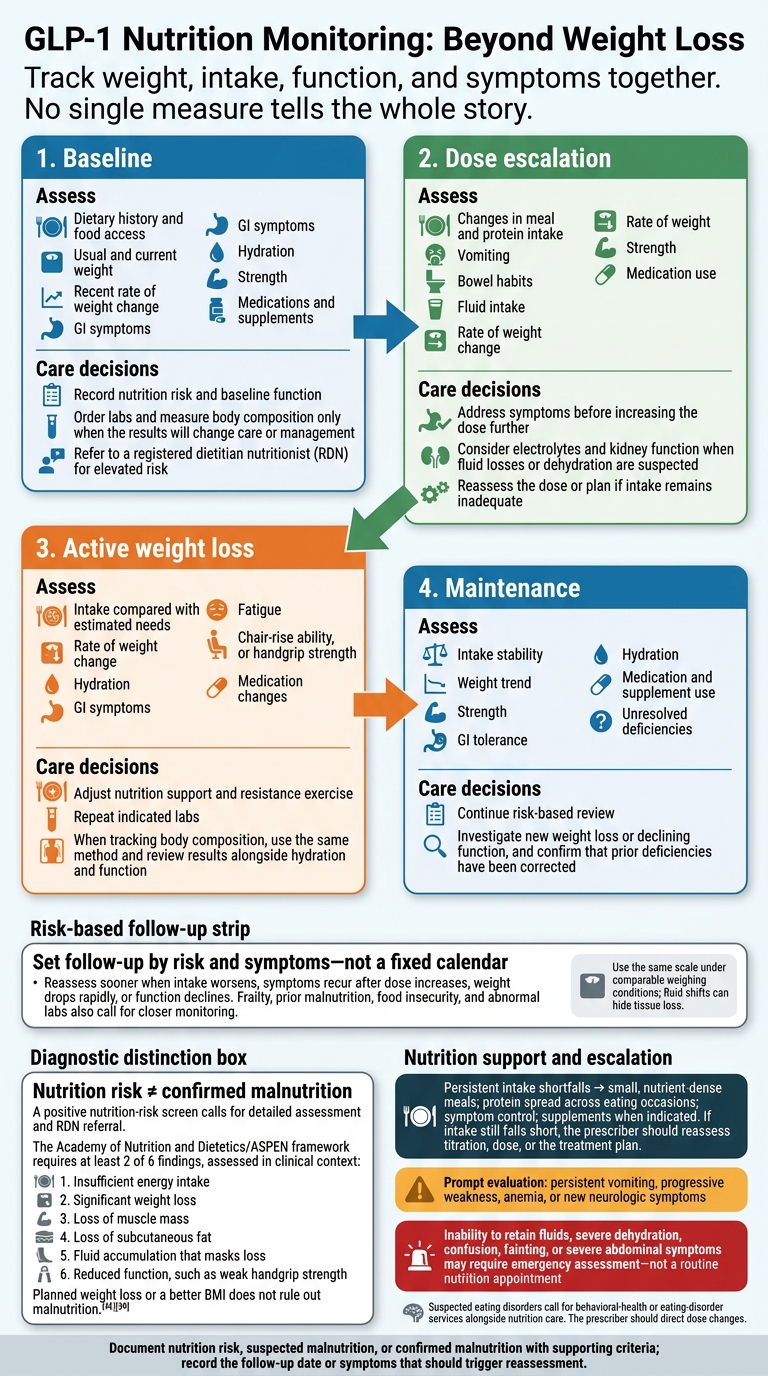
GLP-1 Nutrition Monitoring: Beyond Weight Loss
When intake gaps or abnormal labs appear, move from screening to follow-up based on the treatment phase. Track weight trends, intake, function, and indicated lab results to detect hidden malnutrition that may persist.
A positive nutrition-risk screen is not a malnutrition diagnosis. It calls for a more detailed assessment and referral to a registered dietitian nutritionist (RDN). The Academy of Nutrition and Dietetics/ASPEN framework requires at least 2 of 6 findings: insufficient energy intake, significant weight loss, loss of muscle mass, loss of subcutaneous fat, fluid accumulation that masks loss, and reduced function, such as weak handgrip strength. Assess these findings in clinical context. Planned weight loss or a better BMI does not rule out malnutrition.
Monitoring by Treatment Phase
Track weight, intake, function, and symptoms together. No single measure tells the whole story.
| Treatment phase | What to assess | Care decisions |
|---|---|---|
| Baseline | Dietary history and food access; usual and current weight; recent rate of weight change; GI symptoms; hydration; strength; medications and supplements | Record nutrition risk and baseline function. Order labs and measure body composition only when the results will change care or management. Refer to an RDN for elevated risk. |
| Dose escalation | Changes in meal and protein intake, vomiting, bowel habits, fluid intake, rate of weight change, strength, and medication use | Address symptoms before increasing the dose further. Consider electrolytes and kidney function when fluid losses or dehydration are suspected. Reassess the dose or plan if intake remains inadequate. |
| Active weight loss | Intake compared with estimated needs; rate of weight change; hydration; GI symptoms; fatigue, chair-rise ability, or handgrip strength; medication changes | Adjust nutrition support and resistance exercise. Repeat indicated labs. When tracking body composition, use the same method and review results alongside hydration and function. |
| Maintenance | Intake stability; weight trend; strength; GI tolerance; hydration; medication and supplement use; unresolved deficiencies | Continue risk-based review. Investigate new weight loss or declining function, and confirm that prior deficiencies have been corrected. |
Set follow-up by risk and symptoms - not a fixed calendar. Reassess sooner when intake worsens, symptoms recur after dose increases, weight drops rapidly, or function declines. Frailty, prior malnutrition, food insecurity, and abnormal labs also call for closer monitoring. Use the same scale under comparable weighing conditions, since fluid shifts can hide tissue loss.
Nutrition Support and When to Escalate Care
If monitoring shows persistent intake shortfalls, move from watching intake to providing active support.
Build a plan the patient can tolerate: small, nutrient-dense meals, protein spread across eating occasions, and symptom control. Use supplements when indicated and care tailored to symptoms. If intake still falls short, the prescriber should reassess titration, dose, or the treatment plan.
Persistent vomiting, progressive weakness, anemia, or new neurologic symptoms need prompt evaluation. Inability to retain fluids, severe dehydration, confusion, fainting, or severe abdominal symptoms may require emergency assessment - not a routine nutrition appointment. Suspected eating disorders call for behavioral-health or eating-disorder services alongside nutrition care. The prescriber should direct dose changes.
Documenting Care and Using Clinician Resources
Document the screening result, weight trajectory, intake concerns, function, counseling, testing rationale, RDN referral, and medication decisions. Specify whether the finding is nutrition risk, suspected malnutrition, or confirmed malnutrition, and include the supporting criteria. Record the next follow-up date or the symptoms that should trigger reassessment.
Conclusion: Evidence Limits and Care Priorities
During GLP-1 therapy, weight loss can hide inadequate food intake and declining function. Assess more than weight: consider intake, body composition, strength, mobility, symptoms, and labs when indicated.
What We Know and What Remains Unclear
With these evidence limits in mind, the final clinical task is follow-up based on each patient’s risk.
| Evidence category | Supported finding | Important limit |
|---|---|---|
| Randomized trials and body-composition substudies | Tirzepatide reduces weight, fat mass, and lean mass over 72 weeks. | These findings do not establish adequate nutrition or preserved function. |
| Observational associations | One dietary analysis found lower protein intake among GLP-1 users. | This association does not prove that the medication caused the difference. |
| Clinical starting point | A practical protein target during active weight loss is 1.2–1.6 g/kg/day, adjusted for body size and clinical context. | Definitive GLP-1-specific trials have not established this range. |
| Unresolved questions | Long-term micronutrient outcomes, deficiency rates, and the best protein dose and timing remain unclear. | - |
Search cutoff: October 8, 2026.
Use this evidence to guide selective monitoring and testing, not to label every patient as deficient or malnourished. Escalate care when intolerance persists or intake falls. Do not delay urgent evaluation for dehydration or neurologic signs.
FAQs
How can I tell normal appetite loss from undernutrition?
Normal appetite loss is usually mild and easy to manage. To tell it apart from undernutrition, track changes in weight, food intake, and physical signs. Unintentional weight loss of 5% or more in one month, or 10% or more in six months, is a warning sign.
Other signs include consistently low food intake, muscle wasting, loss of body fat, brittle hair, declining grip strength, persistent fatigue, or slower recovery after routine activity.
Can I rebuild muscle while continuing GLP-1 therapy?
Yes. Patients can rebuild or preserve muscle during GLP-1 therapy by pairing enough protein with resistance training.
Aim for 1.2–1.6 grams of protein per kilogram of body weight daily (about 0.54–0.73 grams per pound), spread across 3–4 meals. Add full-body resistance training 2–3 times per week.
DEXA scans or bioimpedance measurements every 12 weeks can help track whether lost weight is coming from fat rather than muscle.
Can normal blood tests miss nutrition problems?
Yes. Routine tests, such as a comprehensive metabolic panel (CMP) or HbA1c, track metabolic and organ health. But they can miss calcium, iron, vitamin D, B12, and folate deficiencies in patients using GLP-1 therapies.
Weight loss and lower calorie intake can mask malnutrition. Clinicians should check these micronutrient levels at baseline, especially in older adults and patients with highly restricted diets.