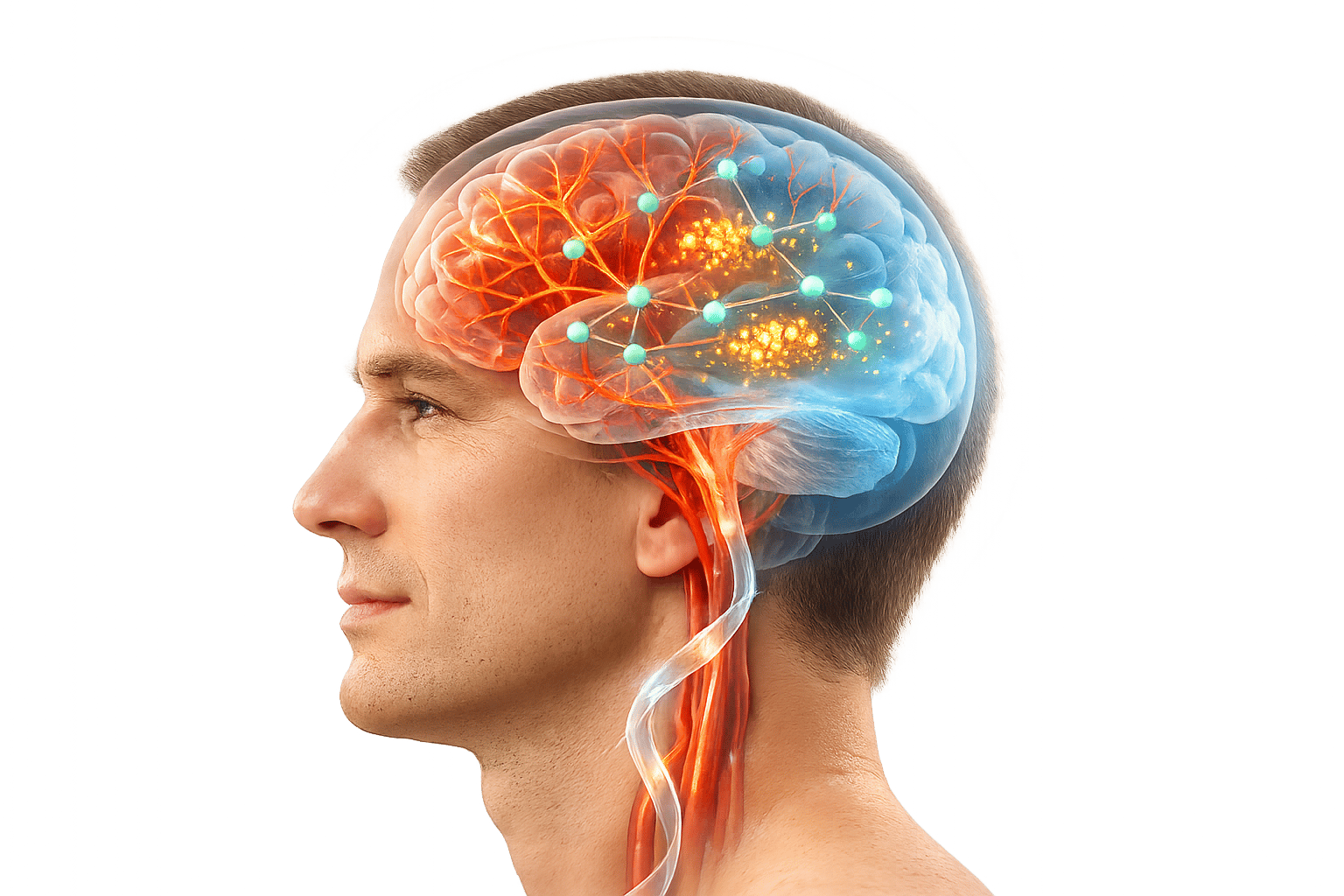
Brain fog - characterized by difficulty concentrating, memory issues, and mental fatigue - is often linked to conditions like long COVID, chronic fatigue syndrome, and autoimmune disorders. Peptides, short chains of amino acids, are emerging as a targeted therapy for addressing brain fog’s biological causes, including neuroinflammation, mitochondrial dysfunction, neurotransmitter imbalances, and reduced neuroplasticity.
Key Takeaways:
- Peptides like Semax, Selank, and Dihexa target brain fog by improving neurotransmitter balance, reducing inflammation, and boosting energy production.
- Mechanism-based therapy matches specific peptides to the root cause of brain fog, such as post-viral inflammation or energy deficits.
- Delivery matters: Intranasal methods are effective for crossing the blood-brain barrier.
- Safety concerns: Many peptides lack FDA approval, requiring careful sourcing and informed patient consent.
Peptides offer a precise approach to managing brain fog, but their use demands strict adherence to safety protocols and ongoing monitoring.
Cognitive Peptides for Focus, Clarity & Brain Fog Relief
sbb-itb-7164bd9
The Pathophysiology of Brain Fog
Brain fog stems from a mix of biological issues that often feed into each other, creating a cycle of cognitive dysfunction.
Neuroinflammation and Immune Dysregulation
Chronic neuroinflammation plays a central role in brain fog. When microglia - specialized immune cells in the brain - become activated, they release pro-inflammatory cytokines like TNF-α, IL-1β, and IL-6. These molecules interfere with synaptic function and disrupt long-term potentiation, which is critical for memory formation and retention.
Systemic inflammation worsens the problem by increasing the permeability of the blood-brain barrier (BBB). This allows immune cells and inflammatory mediators from the bloodstream to enter the brain, further amplifying neuroinflammation. People with chronic brain fog often show consistently elevated cytokine levels, indicating a lingering inflammatory state that hampers cognitive recovery. Additionally, inflammation reduces levels of Brain-Derived Neurotrophic Factor (BDNF), a protein vital for maintaining synaptic plasticity and neuron survival.
"Post-COVID brain fog is not imaginary - it happens because tiny blood clots block blood flow in the brain, inflammation irritates nerve cells, and the energy factories inside brain cells stop working properly." - Dr. Julian Douwes, M.D.
This inflammatory process not only damages synaptic connections but also disrupts mitochondrial function, leading to energy deficits that further impair brain function.
Mitochondrial Dysfunction and Energy Deficits
The brain, while accounting for only 2% of body weight, consumes 20% of the body’s energy. Every mental task - from producing neurotransmitters to maintaining ion balance - relies on ATP, the cell’s energy currency. When mitochondrial function falters, cognitive performance quickly declines.
Damaged mitochondria produce excessive reactive oxygen species (ROS), which harm neuronal membranes and mitochondrial DNA, creating a vicious cycle of dysfunction. Age compounds this issue, as NAD⁺ levels - a molecule critical for mitochondrial energy production - drop by roughly 50% between the ages of 40 and 60.
"When mitochondrial output drops, the brain cannot sustain the energy demands of complex cognition. Patients describe this as hitting a cognitive wall." - Dr. Julian Douwes, M.D.
Lower ATP levels also disrupt the production and regulation of neurotransmitters, further deepening cognitive issues.
Neurotransmitter Imbalance and HPA Axis Dysregulation
Brain fog often involves widespread disturbances in neurotransmitter systems. Neuroinflammation and mitochondrial stress alter the metabolism of these neurotransmitters, leading to noticeable declines in attention, motivation, processing speed, and overall alertness.
Chronic stress exacerbates these problems by overactivating the hypothalamic–pituitary–adrenal (HPA) axis. Prolonged cortisol exposure damages hippocampal neurons and primes microglia for inflammatory activation. This creates a feedback loop where stress worsens inflammation, which in turn heightens stress sensitivity, further degrading cognitive performance. Moreover, gut inflammation can communicate with the brain via the vagus nerve, triggering additional neuroinflammation that disrupts both mitochondrial function and neurotransmitter balance.
These interconnected mechanisms highlight the importance of precision therapies, such as peptide treatments, tailored to address the specific underlying causes of brain fog. Clinicians can utilize dosing protocols and clinical tools to refine these interventions. This concept will be explored further in the upcoming sections on peptide classes and their clinical uses.
How Key Peptide Classes Work
Understanding how peptides target specific brain fog pathways is crucial. Here's a closer look at how different peptide classes address the underlying mechanisms of brain fog.
Neurotrophic Modulators and Synaptic Plasticity
Brain fog often stems from reduced neuroplasticity and synaptic degradation. Neurotrophic peptides work to counter these issues. For instance, Semax enhances levels of BDNF (Brain-Derived Neurotrophic Factor) and NGF (Nerve Growth Factor), which are vital for improving synaptic plasticity. It also supports cholinergic neurons in the basal forebrain - key for attention and memory - and boosts dopaminergic activity in the prefrontal cortex, sharpening focus and working memory. Dihexa, on the other hand, mimics hepatocyte growth factor (HGF) by amplifying HGF/c-Met signaling, promoting synaptogenesis and dendritic spine density in the hippocampus and cortex. Similarly, Noopept increases NGF and BDNF mRNA expression in the hippocampus, aiding memory consolidation and retrieval.
| Peptide | Primary Mechanism | Cognitive Benefit |
|---|---|---|
| Semax | Increases BDNF, NGF, NT-3; dopamine modulation | Focus, working memory, neuroprotection |
| Dihexa | Positive modulation of HGF/c-Met receptor | Synaptogenesis, dendritic spine density |
| Noopept | Boosts NGF and BDNF mRNA expression in hippocampus | Memory consolidation and retrieval |
In addition to enhancing synaptic support, some peptides also address inflammation, a key factor in brain fog.
Anti-Inflammatory and Glial Modulators
Chronic microglial activation, which leads to sustained cytokine release, is a major driver of brain fog. Peptides like Semax and Leu-His reduce excessive cytokine production and dampen microglial activation caused by brain inflammation or stress. Selank, a tuftsin analog, helps regulate T-helper cell balance and cytokine expression, reducing neuroinflammatory signaling. Meanwhile, GLP-1 receptor agonists such as Exendin-4 improve insulin signaling in the brain, counteracting inflammation and preventing the buildup of amyloid-β oligomers. Additionally, BPC-157 may indirectly reduce neuroinflammation by restoring gut barrier integrity, which limits systemic inflammatory signals from crossing the blood-brain barrier.
Mitochondrial and Energy-Supporting Peptides
Mitochondrial dysfunction depletes the energy neurons need for complex cognitive tasks, making energy-targeted peptides essential for recovery. MOTS-C, a mitochondrial-derived peptide, activates the AMPK pathway to promote mitochondrial biogenesis and improve glucose utilization. This peptide mimics the metabolic benefits of exercise, engaging similar pathways to boost cognitive performance. Peptides that enhance NAD+ metabolism are also critical, as declining NAD+ levels impair mitochondrial ATP production. By activating SIRT1 pathways, these peptides restore energy and provide neuroprotection.
Stress and Anxiety Modulators
Overactivation of the HPA axis and anxiety-related interference can also hinder cognitive performance. Selank addresses these issues by modulating GABA-A receptors and monoaminergic systems, offering anxiety relief without the side effects of benzodiazepines. It also enhances BDNF-driven neuroplasticity. Combining Semax with Selank provides a dual approach, targeting both anxiety and the neural deficits underlying brain fog.
Vascular and Cerebral Perfusion Agents
Proper cerebral blood flow is essential for optimal cognitive function, and impaired perfusion is a known contributor to brain fog. BPC-157 supports the nitric oxide system, which regulates vascular tone and cerebral blood flow. Disruptions in this system can negatively impact brain regions critical for executive function. Additionally, growth hormone-releasing peptides like Ipamorelin and CJC-1295 enhance cerebral perfusion by stimulating the GH/IGF-1 axis. This not only promotes hippocampal neurogenesis but also improves synaptic plasticity, supporting overall vascular health in the brain.
Clinical Applications of Peptides for Brain Fog
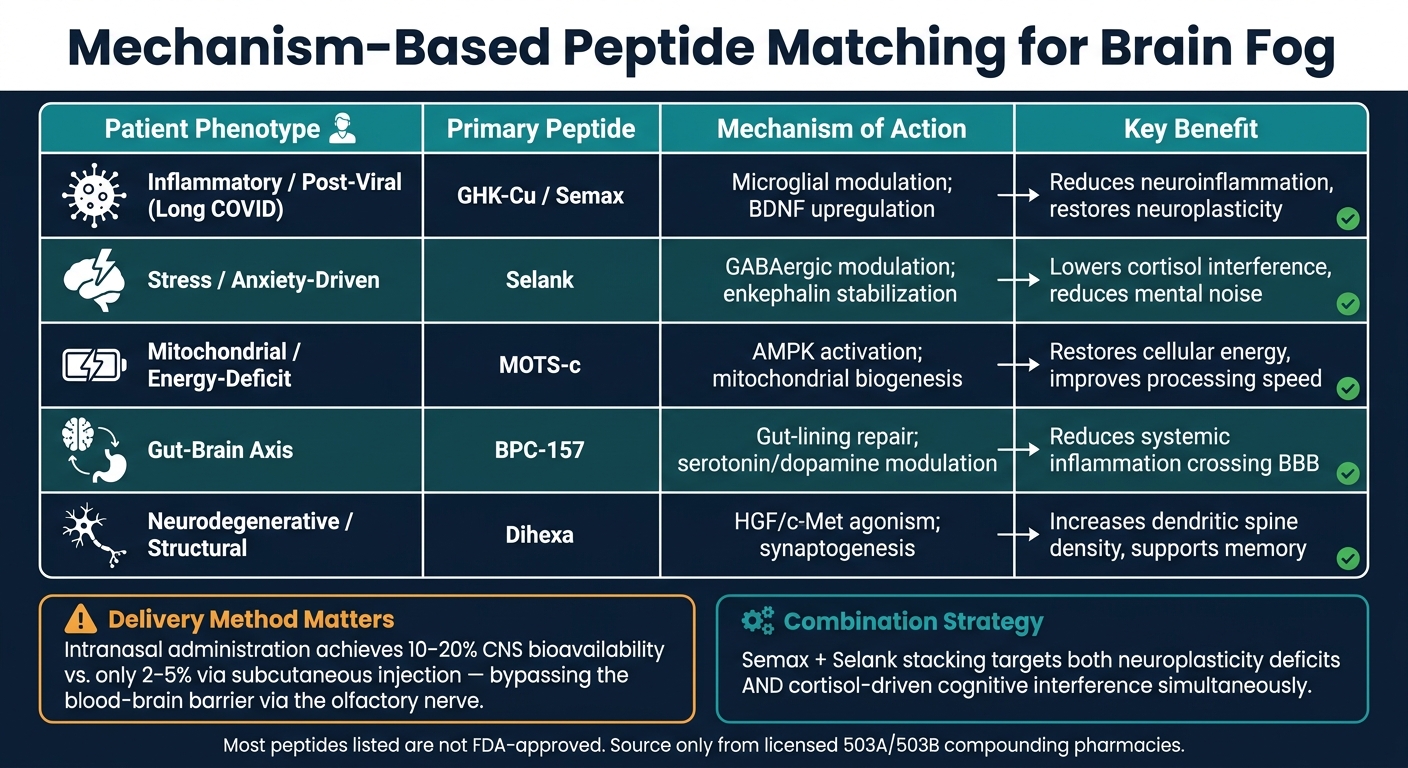
Peptides for Brain Fog: Matching Patient Phenotype to Treatment
Matching Peptides to Patient Phenotype
To treat brain fog effectively, you need to identify its root cause and pair it with the right peptide. Brain fog isn't a standalone condition - it’s a symptom with various underlying biological triggers, each requiring a tailored approach.
As Alexander Zubkov, MD, PhD, of Mind Body Neurology, explains:
"Brain fog isn't seen as a symptom to mask but as a message from the brain - a sign of deeper imbalance."
This approach, known as mechanism-based therapy, focuses on matching specific peptides to distinct patient phenotypes. Here's a breakdown of the most relevant presentations:
| Phenotype | Primary Peptide | Mechanism |
|---|---|---|
| Inflammatory / Post-Viral (e.g., Long COVID) | GHK-Cu / Semax | Microglial modulation; BDNF upregulation |
| Stress / Anxiety-Driven (high cortisol, "mental noise") | Selank | GABAergic modulation; enkephalin stabilization |
| Mitochondrial / Energy-Deficit (profound fatigue, slow processing) | MOTS-c | AMPK activation; mitochondrial biogenesis |
| Gut-Brain Axis (GI symptoms + cognitive symptoms) | BPC-157 | Gut-lining repair; serotonin/dopamine modulation |
| Neurodegenerative / Structural (synaptic loss, age-related decline) | Dihexa | HGF/c-Met agonism; synaptogenesis |
One emerging strategy is mechanism-based stacking, where peptides like Semax and Selank are combined. This pairing can simultaneously enhance neuroplasticity and reduce cortisol-related stress effects.
Delivery method matters, too. For cognitive benefits, intranasal administration is highly effective. It bypasses the blood-brain barrier via the olfactory nerve, achieving 10% to 20% CNS bioavailability - far higher than the 2% to 5% seen with subcutaneous injections. For example, a single intranasal dose of Semax can increase hippocampal BDNF protein levels by 1.4-fold within hours.
Safety and Regulatory Considerations
Once the appropriate peptide is matched to the patient’s needs, it's essential to address safety and regulatory factors.
In the U.S., the regulatory framework for cognitive peptides is both complex and evolving. Most peptides used for brain fog are not FDA-approved drugs, meaning they are classified as "unapproved substances" rather than traditional off-label treatments. To ensure safety, clinicians should source peptides exclusively from licensed 503A compounding pharmacies (patient-specific production) or 503B outsourcing facilities (batch production under strict cGMP standards).
Between 2023 and 2025, the FDA restricted several cognitive peptides, including BPC-157, CJC-1295, Ipamorelin, Selank, and Semax, placing them on the "Category 2" list due to insufficient safety data. As of April 2026, Semax and Selank are no longer authorized for compounding in the U.S.. However, this could change - on July 24, 2026, the FDA's Pharmacy Compounding Advisory Committee (PCAC) will review Semax for potential inclusion on the 503A Bulks List for conditions like cerebral ischemia and migraine.
Clinicians must follow key safeguards:
- Always request a Certificate of Analysis (COA) verifying >98% purity, sterility, and absence of endotoxins.
- Avoid grey-market peptides, which have been found to contain 30% to 70% less active ingredient than labeled, posing serious risks when dosing precision is critical.
- Opt for 503B outsourcing facilities whenever possible, as they undergo stricter FDA inspections compared to 503A pharmacies.
- Secure documented informed consent to ensure patients understand the experimental nature of these treatments.
For peptides affecting the growth hormone axis, like Ipamorelin, regular monitoring of fasting blood glucose and IGF-1 levels is essential to screen for insulin resistance. Approximately 7% of patients using Semax report elevated blood glucose levels, making baseline and follow-up glucose testing a standard part of any Semax protocol.
Once safety measures are in place, tracking outcomes becomes the next priority.
Tracking Outcomes in Peptide Therapy
Outcome tracking begins well before the first dose. Establishing baseline labs, symptom goals, and side-effect tolerances creates a foundation for meaningful comparisons over time. Follow-up evaluations at 4, 8, and 12 weeks allow clinicians to assess progress and identify any emerging side effects.
Tracking should include both subjective and objective data. Use validated tools like the Montreal Cognitive Assessment (MoCA) for cognition, the Brief Fatigue Inventory (BFI) for energy, and the Pittsburgh Sleep Quality Index (PSQI) for sleep. Daily clarity ratings on a scale of 1 to 10 can also help monitor progress. Noticeable improvements often appear between weeks 2 and 3 with consistent use.
For inflammatory or post-viral brain fog, biomarker tracking adds precision. Measuring TGF-β1, C4a, VEGF, and MMP-9 every 8–12 weeks can indicate whether neuroinflammation is decreasing. Baseline and end-of-cycle metabolic safety labs, including fasting glucose, a comprehensive metabolic panel (CMP), and a complete blood count (CBC), are also crucial.
To maintain receptor sensitivity, cycle neurotrophic peptides with 4–8 weeks on, followed by 2–4 weeks off. If cognitive benefits plateau before the cycle ends, it’s usually a sign to pause rather than increase the dose.
Platforms like PeptidePrescriber can provide clinicians with evidence-based monographs and tracking tools, reinforcing this mechanism-based approach.
Using PeptidePrescriber in Mechanism-Based Practice
Integrating outcome tracking into everyday clinical practice isn't just about understanding the theory - it's about having dependable tools to make it happen. While the previous section explored how to align peptides with specific patient phenotypes, turning that knowledge into action requires a solid clinical support system.
Accessing Evidence-Based Peptide Monographs
PeptidePrescriber is tailored for licensed MDs, DOs, NPs, and PAs working in functional, regenerative, and anti-aging medicine. Its library boasts over 20 peptide monographs and six prescribing guides, each delving into mechanisms of action, clinical uses, and safety data. What makes these monographs stand out is their commitment to transparency and evidence:
"Every protocol references PubMed. Verify the evidence yourself." – PeptidePrescriber
This rigorous approach ensures that clinicians can trust the information while applying it in practice. Beyond the monographs, the platform also provides tools to simplify clinical workflows.
Clinical Tools for Day-to-Day Practice
Having access to evidence-based data is just the start - practical tools are critical for integrating peptide therapy into daily routines. PeptidePrescriber offers five tools designed to make mechanism-based therapy more efficient. Here’s a quick look at what’s available:
- Reconstitution Calculator: Automatically calculates precise syringe units based on vial size and desired dosage, reducing the risk of manual errors.
- Prescriber Starter Pack: Includes consent templates, an implementation checklist, and regulatory quick references to help new prescribers establish a compliant practice.
- AI Search Research Assistant: Speeds up the process of verifying contraindications or dosing schedules by allowing fast searches across monographs and guidance documents.
- Dosing Protocols: Offers detailed loading and maintenance schedules tailored to specific indications.
These tools are updated monthly to ensure they reflect the latest research and clinical standards, providing clinicians with reliable, up-to-date resources.
| Tool | Function |
|---|---|
| Reconstitution Calculator | Calculates syringe units based on vial size and desired dose |
| AI Search Assistant | Rapid search across monographs and clinical guidance |
| Dosing Protocols | Provides loading and maintenance schedules by indication |
| Prescriber Starter Pack | Offers consent templates, workflows, and regulatory references |
Each tool is designed to help clinicians create precise, personalized treatment plans that align with the unique needs of their patients.
Staying Current on Regulatory Guidance
In a field where FDA reclassifications and compliance standards are constantly evolving, staying informed is non-negotiable. PeptidePrescriber includes an FDA Regulatory Guide to help clinicians quickly confirm a peptide’s compounding status and compliance context. The platform is pharmacy-agnostic, providing sourcing guidance and vetted introductions to reputable compounding pharmacies. This flexibility allows clinicians to maintain quality and compliance while choosing their preferred sources.
"Peptide prescribing clarity - delivering clear dosing protocols, mechanism summaries, and sourcing guidance." – PeptidePrescriber
Conclusion: Peptide Mechanisms in Brain Fog Management
Brain fog stems from a mix of issues - neuroinflammation, mitochondrial energy shortages, neurotransmitter imbalances, and vascular problems. Tackling these with a focus on mechanisms is vital in clinical settings.
Peptides play a key role in addressing these challenges. They target specific dysfunctions, with some enhancing neuroplasticity, others improving mitochondrial performance, and some even helping to reduce anxiety. When matched to a patient's specific needs, peptides can lead to noticeable and measurable cognitive improvements. However, their effectiveness hinges on a solid metabolic foundation.
"Peptides offer a unique bridge between cellular repair and functional recovery." – Alexander Zubkov, MD, PhD, Mind Body Neurology
Metabolic health is critical for neuromodulation. For example, without enough mitochondrial substrates, even increased BDNF (brain-derived neurotrophic factor) levels may not achieve their full potential. This is particularly important as NAD+ levels can drop by up to 50% between early adulthood and later years.
For clinicians, applying these insights is crucial. Resources like PeptidePrescriber provide evidence-based tools, dosing guidelines, and regulatory information to ensure safe and precise use. By adopting a tailored, mechanism-focused strategy, practitioners can address not just the symptoms of brain fog but its root causes. Understanding how peptides work is essential, but having access to accurate clinical tools ensures the best possible outcomes.
FAQs
Which peptide is best for my type of brain fog?
When it comes to addressing brain fog, the right peptide depends on your specific symptoms and their root causes. Semax is known for potentially improving focus, processing speed, and mental clarity by boosting BDNF levels and influencing dopamine pathways. If your brain fog is tied to anxiety or stress, Selank might be a good choice for soothing the nervous system. For cases where inflammation or chronic stress plays a role, BPC-157 could offer support. Licensed professionals can rely on PeptidePrescriber to access evidence-based tools and tailor protocols to individual needs.
How can I tell if brain fog is caused by inflammation or low energy?
Brain fog isn’t a diagnosis - it’s a symptom that points to deeper issues. Often, it’s tied to neuroinflammation, which disrupts synaptic signaling in the brain. This can stem from various causes, such as stress, gut health problems, or autoimmune reactions.
When low energy accompanies brain fog, it might feel like a mental crash after even small efforts. This could hint at mitochondrial dysfunction, where the body’s energy production systems aren’t working as they should.
To uncover the root cause, healthcare professionals often turn to diagnostic tests. These might include panels for inflammation markers like hs-CRP and ESR, thyroid function tests, or assessments of nutrient levels. For guidance in diagnosing and treating such conditions, PeptidePrescriber provides valuable clinical resources tailored to medical professionals.
Are these peptides legal and safe in the U.S.?
The legality and safety of peptides in the U.S. hinge on how they are regulated. Peptides approved by the FDA, such as semaglutide, are produced under strict safety and manufacturing standards. On the other hand, many peptides marketed for issues like brain fog remain unapproved, lacking FDA clearance and sufficient human research to back their use.
For regulated options, licensed 503A compounding pharmacies can provide peptides with a valid prescription. However, peptides sold as "research chemicals" are neither verified nor authorized for human use, raising significant safety concerns. PeptidePrescriber serves as a resource for clinicians, helping them navigate compliance and make informed decisions regarding peptide use.