
Peptide therapy conferences are essential for healthcare professionals and researchers to stay informed about the latest advancements in this growing field. These events cater to clinicians, researchers, and industry professionals, offering dosing protocols, certification opportunities, and insights into drug development. Whether you're looking to refine patient care strategies or explore pharmaceutical innovations, these conferences provide key resources and networking opportunities.
Key Takeaways:
- Clinician-focused events: Practical sessions on dosing, patient selection, and case reviews.
- Industry summits: Insights into R&D, drug formulation, and commercialization.
- Formats: In-person for hands-on learning; virtual/hybrid for flexibility.
- Preparation tips: Set learning goals, review agendas, and budget for costs like registration, travel, and lodging.
For US-based clinicians, standout options include the ISSCA Peptide World Conference for clinical protocols and the Boulder Peptide Symposium for pharmaceutical development. Planning ahead and engaging actively can maximize the value of these events, whether you're seeking certifications, networking, or actionable insights.
How to Choose the Right Conference
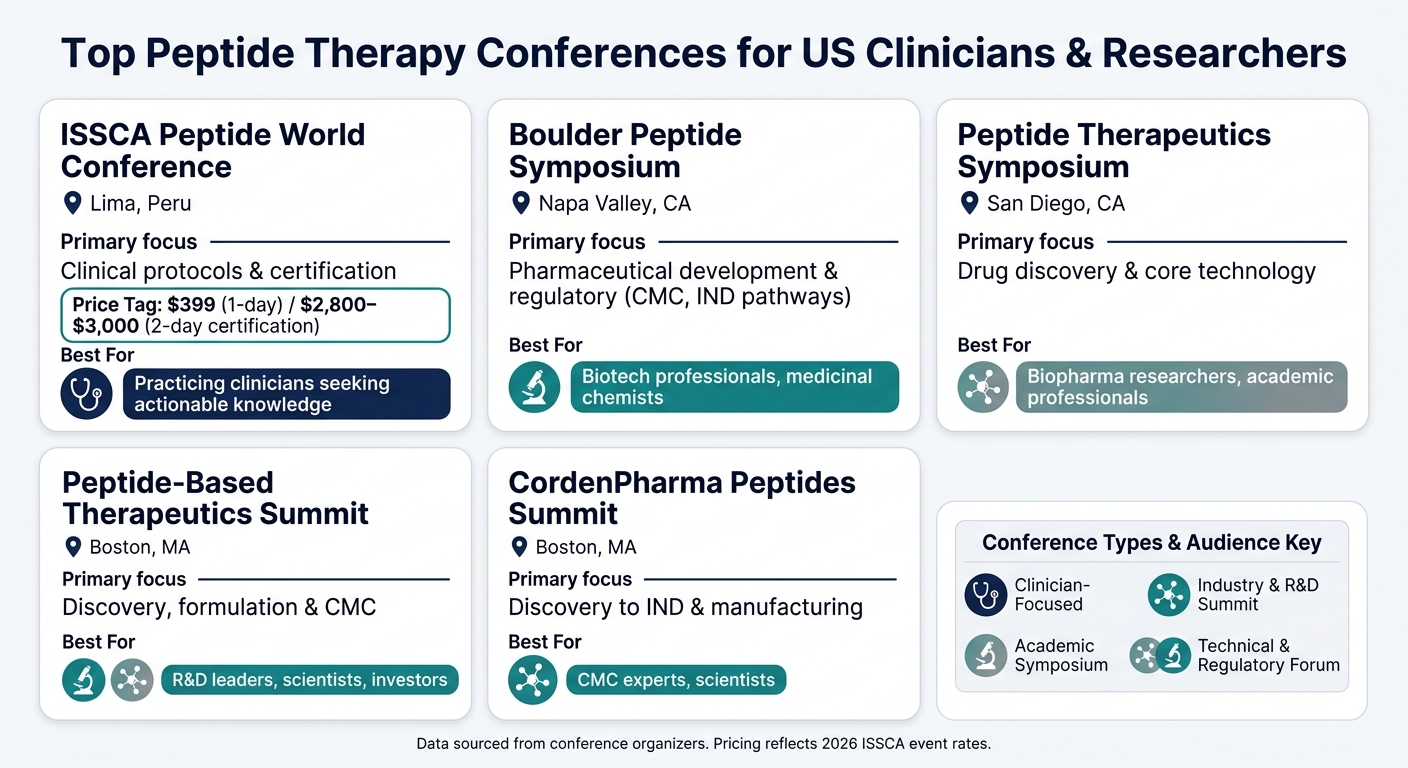
Top Peptide Therapy Conferences for US Clinicians & Researchers
Once you understand the different conference formats, the next step is finding an event that aligns with your professional goals. Choosing a conference tailored to your clinical needs ensures that the education you receive is directly applicable to your practice, building on a solid clinical overview of peptide therapy.
Types of Peptide Therapy Conferences
Peptide therapy conferences typically fall into four main categories, each serving distinct professional interests:
- Clinician-focused events: These, like the ISSCA Peptide World Conference, emphasize practical applications and offer protocols that can be implemented immediately in a clinical setting.
- Industry and R&D summits: Ideal for drug developers, biotech investors, and medicinal chemists, these events focus on advancing peptides from research to commercialization.
- Academic symposia: Conferences such as the Peptide Therapeutics Symposium in San Diego connect academic research with biopharma, covering advancements in drug discovery and core technologies.
- Technical and regulatory forums: Events like the Boulder Peptide Symposium delve into pharmaceutical development, including frameworks like CMC (Chemistry, Manufacturing, and Controls) and IND (Investigational New Drug) pathways.
Identifying the type of conference that aligns with your role can save you time and money while ensuring the content is relevant to your practice.
How to Assess Clinical Relevance
After narrowing down the type of conference that suits your needs, take a closer look at the agenda. Don’t just skim the session titles - read the descriptions to ensure the content matches your clinical interests. Look for keywords like "case-based discussion" or "masterclass", which indicate sessions designed with real-world application in mind.
It's also worth considering what you’ll walk away with. Conferences that provide resources such as dosing manuals, reconstitution guides, consent form templates, and post-care instructions offer more practical value than those that simply hand out certificates of attendance. For instance, the ISSCA Advanced Peptide Therapy Certification includes masterclasses centered on real clinical cases and structured dosing strategies, offering a credential that goes beyond standard documentation.
"This event is clinical, applicable, and validated; a true opportunity to learn directly from those implementing cutting-edge Peptide protocols." - ISSCA
Key Conferences for US Clinicians
If you're a US-based healthcare professional, several conferences stand out depending on your focus:
| Conference | Location | Primary Focus | Best For |
|---|---|---|---|
| ISSCA Peptide World Conference | Lima, Peru | Clinical protocols & certification | Practicing clinicians seeking actionable knowledge |
| Boulder Peptide Symposium | Napa Valley, CA | Pharmaceutical development & regulatory | Biotech professionals, medicinal chemists |
| Peptide Therapeutics Symposium | San Diego, CA | Drug discovery & core technology | Biopharma researchers, academic professionals |
| Peptide-Based Therapeutics Summit | Boston, MA | Discovery, formulation & CMC | R&D leaders, scientists, investors |
| CordenPharma Peptides Summit | Boston, MA | Discovery to IND & manufacturing | CMC experts, scientists |
For clinicians who prioritize patient care, the ISSCA Peptide World Conference is a standout choice. The 2026 event offers a 1-day pass for $399 USD or a full 2-day certification pass ranging from $2,800 USD (early bird) to $3,000 USD. On the other hand, if your focus is on peptide development or regulatory affairs, the Boulder Peptide Symposium in Napa Valley is the only event dedicated exclusively to the pharmaceutical side of peptide therapeutics.
sbb-itb-7164bd9
How to Prepare for a Peptide Therapy Conference
Once you've picked the right conference, the next step is preparing effectively. The effort you put in before the event will determine how much you gain from it.
Budgeting and Cost Planning
When planning your budget, don’t stop at the registration fee - factor in lodging, meals, transportation, and even potential revenue loss.
| Expense Category | Estimated Low | Estimated High | Notes |
|---|---|---|---|
| Registration | $350 | $3,000 | Higher costs often include hands-on certifications |
| Lodging | $219/night | $465/night | Book early to secure discounted group rates |
| Meals | Included | $150+ | Basic refreshments are often included; VIP perks may cost extra |
| Add-ons | $0 | Varies | Includes CME processing, workshops, and special networking events |
Most conferences offer discounted hotel blocks, but these deals tend to expire three to four weeks before the event. To get the best rates, book as soon as possible. Plan for at least three nights - arriving the day before sessions begin and leaving the day after they end - so you’re not rushed and can fully engage with the content and networking opportunities.
Look for ways to cut costs, like membership discounts or free registration if you’re presenting. Always register for the conference before booking travel, and double-check refund policies to avoid surprises.
Once your budget is set, shift your focus to defining your learning and networking goals.
Setting Learning and Networking Goals
Having clear goals is key. Are you looking to update your knowledge, earn a certification, or learn protocols you can immediately apply in practice? Defining your objectives will help you plan your time effectively.
Start by reviewing the conference agenda. Focus on sessions that align with your clinical interests, whether it’s metabolic health, tissue repair, neuroprotection, or aesthetic treatments. If you’re aiming to implement new practices right away, prioritize case-based sessions or masterclasses that offer actionable protocols and supporting materials.
Don’t overlook networking opportunities - they can be just as valuable as the sessions themselves. Events like MedConnect or Networking with the Stars are excellent for building professional relationships. Also, check if your registration includes access to on-demand recordings or a digital library. This lets you focus on live sessions and networking while having the option to revisit lectures later.
Clinical Preparation Before You Attend
To make the most of the conference, prepare specific clinical questions ahead of time.
Bring 2–3 anonymized patient cases where conventional treatments haven’t worked. This preparation allows you to gain practical insights during case-based sessions or masterclasses. Real-world scenarios make discussions more relevant and actionable for your practice.
It’s also a good idea to brush up on the regulatory landscape. For instance, the FDA’s Pharmacy Compounding Advisory Committee (PCAC) is currently reviewing 12 peptides, including BPC-157, KPV, and TB-500, for the 503A Bulk Drug Substances List. Knowing the status of these reviews can help you engage more effectively during compliance or legal sessions.
If you’re already prescribing peptides, audit your current lab protocols. For example, growth hormone peptides like Sermorelin and Ipamorelin often require baseline labs such as IGF-1, fasting glucose, HbA1c, and lipid panels. Reviewing these ahead of time ensures you’re ready to refine your approach based on what you learn.
For beginners, tools like PeptidePrescriber can be incredibly helpful. These platforms offer dosing guides, reconstitution calculators, and regulatory resources, giving you a solid foundation to build on during the conference. This preparation ensures you’re ready to dive into advanced content with confidence.
Getting the Most Out of a Conference
How to Get the Most from Sessions
Going into a conference without a plan can leave you overwhelmed. Start with a clear strategy. Think about what you want to gain - are you there for broad overviews or specific, actionable insights? For example, Day 1 often focuses on keynotes and general trends, while Day 2 dives into more practical topics like masterclasses, dosing logic, and case reviews. If applying what you learn is your main goal, prioritize those Day 2 sessions.
To get the most out of each session, evaluate the evidence being presented. Use a grading system to assess credibility:
- A: Large randomized controlled trials (RCTs)
- B: Moderate RCTs
- C: Small studies or preclinical data
- D: Mechanistic hypotheses
Come prepared with specific questions about the evidence. For instance, ask about the metabolic or oncologic risks tied to certain therapies. These types of questions often spark the most valuable discussions.
Don’t limit yourself to the main sessions. Pre- and post-conference workshops - like "Grand Rounds" with faculty or business-focused seminars - often provide highly practical, hands-on content that can be immediately applied in your work.
Networking for Professional Growth
Some of the best learning happens outside the lecture hall. Networking events, like MedConnect, are excellent opportunities to meet speakers and peers in a more casual setting. These conversations can lead to meaningful professional relationships and even collaborations.
"MedConnect is our signature networking event... It's a relaxed social setting to connect with speakers and peers over cocktails and appetizers." - ISSCA
When you meet someone, make it a habit to document their name, specialty, and any follow-up actions. This ensures you don’t lose track of important connections.
Vendor expos are another great networking opportunity. While visiting, take the time to verify critical details like Certificates of Analysis (COAs) and accreditation standards. For example, confirm PCAB accreditation and USP 797 compliance to ensure safe and legally sound prescribing practices. Log vendor information immediately to make follow-up easier.
Putting Conference Takeaways into Practice
The real value of a conference lies in how you apply what you’ve learned. Start by organizing a team debrief. Share the most important protocols and insights with your clinical staff. If the conference offers on-demand recordings (typically available about 24 days later), use them to revisit complex sessions or share with colleagues who couldn’t attend.
If you’re introducing new practices, such as peptide therapies, update your SOPs to reflect that peptides are compounded and not FDA-approved. Begin with a few well-researched options, like BPC-157 for tissue repair or Sermorelin for growth hormone optimization, before expanding your offerings.
To make clinical implementation easier, consider tools like PeptidePrescriber. This platform includes features like reconstitution calculators, dosing protocol libraries, and regulatory references, helping reduce errors and ensuring compliance with best practices. By combining pre-conference planning with post-event follow-up, you can create a continuous cycle of learning and improvement.
Building Long-Term Expertise Through Conferences
Taking a thoughtful, long-term approach to attending peptide therapy conferences can strengthen clinical knowledge and establish a leadership presence in the industry.
Building a Multi-Year Conference Plan
Developing expertise takes time, and alternating between clinical workshops and science-focused summits each year can help create a balanced foundation. For example, you might attend a clinical event like the ISSCA World Peptide Conference or an AMMG event one year, then follow it up with a science-focused summit such as the European Peptide Symposium the next. This approach ensures your protocols are rooted in practical application while staying updated on the latest advancements.
In the early stages of your plan, focus on earning certification passes. These provide access to valuable resources like protocol books, case study manuals, and updated clinical materials. Once certified, you can gradually progress to more advanced topics year after year, building both skill and confidence.
Tracking Professional and Business Outcomes
Conferences are an investment, and tracking their impact is key to ensuring they deliver value. Measure clinical outcomes, business growth, and compliance metrics to evaluate the effectiveness of new protocols.
From a business perspective, monitor revenue generated by new services introduced after attending a conference. Whether you're offering longevity optimization, metabolic health services, or regenerative treatments, track patient volume quarterly to assess the success of each new initiative. On the compliance side, conduct quarterly audits of your peptide sourcing - whether from 503A or 503B pharmacies - and confirm that prescribed compounds remain on the FDA Bulk Drug Substances list. Tools like PeptidePrescriber can simplify regulatory checks and provide a library of clinical resources to keep your documentation up to date.
Once you've gathered measurable results, use these achievements as a stepping stone to elevate your professional role.
Moving from Attendee to Speaker
Documenting your results can open doors to new opportunities. Transitioning from attendee to speaker might seem daunting, but it’s more achievable than it appears. By consistently tracking outcomes, you'll have the data needed to present a compelling case study.
Events like the Boulder Peptide Symposium offer platforms for emerging speakers through their "Peptide Showcase" sessions. These feature 10-minute presentations followed by a 5-minute Q&A, and approved abstracts often come with complimentary registration. This not only saves on costs but also enhances your visibility in the field.
"This Summit will provide a deep learning experience for all peptide drug hunters and an opportunity to meet accomplished R&D leaders as well as share their scientific work as speakers or via poster presentations." - Tomi Sawyer, Chief Drug Hunter & President, Maestro Therapeutics
Another way to establish yourself is by contributing to industry publications like ISSCA Magazine. Writing articles, combined with active engagement in prescriber networks, can help build a professional profile that naturally leads to speaking invitations, faculty positions, and recognition as a trusted expert in the field.
FAQs
Do peptide therapy conferences offer CME credits?
The availability of Continuing Medical Education (CME) credits at peptide therapy conferences varies. While some events offer certificates or advanced certifications, not all are accredited for CME. It's a good idea to visit the event's website or reach out to the organizers directly to confirm this before signing up. When selecting a conference, focus on those that align with your professional goals. These events often provide helpful clinical tools and frameworks that can support the growth of your peptide therapy practice.
What should I bring to ask better clinical questions at a peptide conference?
To make the most of your clinical questions, come prepared with notes detailing your current challenges and patient case data. Beforehand, review evidence-based monographs, dosing protocols, and mechanisms available on PeptidePrescriber. This preparation gives you a solid foundation. By framing your questions around specific cases or scenarios, you can have more productive discussions with faculty during live Q&A sessions, addressing topics like sequencing, safety, and practical implementation strategies.
How can I safely implement new peptide protocols after a conference?
To implement peptide protocols safely, it's crucial to rely on evidence-based dosing backed by primary research while always prioritizing patient safety. Start with a clear medical rationale for the treatment, ensure patients provide informed consent, and establish baseline labs before beginning. Regular monitoring throughout the process is essential.
Follow structured protocols for key aspects like titration, injection routes, reconstitution, and storage to maintain consistency and safety. Additionally, ensure compliance with regulations by sourcing peptides legally and keeping thorough records of sourcing and monitoring. These steps are vital for maintaining accountability and preparing for any potential reviews.