
If you want the short answer: all 5 peptides in this article are still investigational for IBD in the U.S., and only one - K(D)PT - has randomized human ulcerative colitis data.
Here’s the main takeaway in plain English:
- Thymosin Alpha-1 works higher up in immune signaling and may lower TNF-α, IL-6, and IL-17 while increasing IL-10
- KPV acts closer to the gut lining and aims to shut down NF-κB inside inflamed epithelial cells
- K(D)PT targets the IL-1β/NF-κB pathway and also has gut-barrier repair data, with phase II UC trial results
- NEMO-binding domain peptides block IKK/NEMO, which cuts off inducible NF-κB before many cytokines are released
- TNF-targeting cyclopeptides try to interrupt the TNF-α/TNFR1 signal directly
A few points matter most if you’re reading this as a prescriber:
- None are FDA-approved for intestinal inflammatory disease in the U.S.
- Most evidence is still animal or lab data
- K(D)PT stands out because it has human UC data, but it still is not an approved treatment
- Delivery is a big issue, especially for oral gut-targeted peptides
- Safety is still unclear, especially with infection risk, drug interactions, and use alongside biologics, steroids, thiopurines, or JAK inhibitors
This Peptide “Fixes” Your Gut… But There’s a Catch
sbb-itb-7164bd9
Quick Comparison
| Peptide | Main target | Human gut data? | Main idea | U.S. status |
|---|---|---|---|---|
| Thymosin Alpha-1 | TLR-linked immune signaling, NF-κB network | Limited, not IBD-focused | Broad immune shift | Investigational |
| KPV | NF-κB / MAPK | No | Local epithelial anti-inflammatory effect | Investigational |
| K(D)PT | IL-1β / NF-κB | Yes - phase II UC | Lowers cytokines + supports barrier repair | Investigational |
| NBD peptides | IKK/NEMO → NF-κB | No | Blocks inducible NF-κB upstream | Research only |
| TNF cyclopeptides | TNF-α / TNFR1 | No | Peptide-based TNF blockade | Investigational |
The bottom line: these peptides are interesting from a mechanism view, but they are not ready to replace approved IBD therapy. If you use this article to size them up, the clearest way is to look at where each peptide acts in the cytokine chain, how much human data exists, and what U.S. regulatory limits apply right now.
How Peptides Work in Gut Cytokine Networks
Peptides as Signaling Modulators in Gut Inflammation
Peptide therapeutics are short chains of amino acids, usually 2 to 30 residues long, that can shift immune and epithelial signaling without broad immunosuppression. In gut inflammation, that matters a lot. Instead of depending on one monoclonal target, peptides can act on overlapping cytokine nodes across the same inflammatory network.
Depending on the peptide, the mechanism may involve cytokine binding, receptor modulation, intracellular pathway inhibition, or immune reprogramming toward Treg/IL-10 responses. Different route, same idea: these actions tend to converge on a small group of inflammatory control points in the gut.
TNF-α, IL-6, IL-17, IL-10, and NF-κB in Intestinal Inflammation
NF-κB is a central driver of intestinal inflammatory transcription. Once switched on, it promotes transcription of TNF-α, IL-1β, IL-6, IL-8, COX-2, and adhesion molecules like ICAM-1 and VCAM-1. That creates a nasty feedback loop. Cytokines induced by NF-κB can turn around and activate NF-κB again, which helps keep mucosal inflammation going.
TNF-α sits near the middle of that loop. It increases epithelial permeability by disrupting tight junction proteins and also drives leukocyte recruitment into the lamina propria. IL-6 pushes the cascade further by promoting Th17 differentiation and neutrophil infiltration. IL-17 helps sustain TNF-α and IL-6 production in chronic states, although it can also help support barrier defense when it's kept in check.
IL-10 works as the counterbalance. It is produced by Tregs, macrophages, B cells, and epithelial cells, and it suppresses pro-inflammatory cytokine secretion while helping maintain barrier integrity. IL-10 deficiency is a well-known cause of spontaneous colitis in mouse models, so restoring IL-10 activity has become a key benchmark in peptide research.
That’s the lens to use for the candidates discussed later: each one makes the most sense when you look at which part of this network it suppresses or restores. And because these signals don't just drive inflammation but also damage epithelial structure, barrier readouts matter just as much as cytokine suppression.
Barrier Function, Mucosal Immunity, and Microbiome Effects
Cytokine signaling doesn’t just inflame tissue. It also damages the gut’s physical barrier. IL-6 and IL-17 activate ERK1/2 in intestinal epithelial monolayers, which lowers integrity and increases expression of the pore-forming claudin-2. That shift increases permeability. TNF-α makes the problem worse by disrupting ZO-1, occludin, and claudin organization.
Because of that, peptide studies usually track more than cytokines alone. Common barrier readouts include:
- Tight junction markers such as ZO-1 and occludin
- Transepithelial electrical resistance
- FITC-dextran flux
Those markers show whether a therapy is helping repair barrier function, not just turning down inflammation on paper.
Researchers are also paying closer attention to mucosal immune tone and microbiome-related readouts. Peptides that lower TNF-α and IL-6 while increasing IL-10 tend to support a more stable mucosal setting. In turn, that may help support steadier host-microbiome interactions.
The five peptides below connect back to these same nodes, but each one comes with its own mix of cytokine, barrier, and immune effects.
1. Thymosin Alpha-1 (Tα1)
Primary Cytokine Pathway
Thymosin Alpha-1 is a 28–amino acid peptide that acts on TLR2, TLR3, TLR4, TLR7, and TLR9 signaling in dendritic cells and macrophages. From there, it shifts MyD88–NF-κB, p38 MAPK, and IRF3/IRF7 activity in a direction linked to lower TNF-α, IL-6, and IL-1β and higher IL-10. Tα1 may also turn on IDO in plasmacytoid dendritic cells, which can expand FoxP3+ IL-10–producing Tregs.
Put simply, Tα1 appears to act upstream of the TNF-α, IL-6, IL-17, IL-10, and NF-κB signaling web tied to intestinal inflammation. That matters because gut inflammation tends to run on this same cytokine loop. The main issue is whether this biology leads to a clear clinical gain in the intestine.
Evidence Stage
Most human data on Tα1 comes from chronic hepatitis B/C, sepsis, and COVID-19 rather than gut-focused studies. In DSS and TNBS mouse colitis models, Tα1 lowered TNF-α, IL-1β, IL-17A/F, and myeloperoxidase, while increasing IL-10.
That sounds promising on paper. But there’s a big gap between animal data and patient care. At this point, there are no large, high-quality human trials showing mucosal healing or IBD remission, so intestinal use is still investigational.
Delivery Strategy
Oral absorption is poor, so Tα1 is usually given by subcutaneous injection. Its plasma half-life is about 2–3 hours, yet its immune effects may last around 48–72 hours, which is why intermittent dosing is often used. Common research dosing falls in the 1.6–3.2 mg SC range given two to three times weekly, though gut-specific dosing has not been standardized.
Key Prescribing Limitations
In the United States, Tα1 is not FDA-approved and remains investigational. FDA communications have also flagged concerns around compounded peptide products, which adds regulatory and medicolegal risk outside formal research settings.
So if it’s used for intestinal disease, it should be presented plainly as experimental. That means informed consent, close follow-up, and extra caution in patients who are autoimmunity-prone or already heavily immunosuppressed.
| Factor | Detail |
|---|---|
| FDA approval status | Not approved for any indication in the U.S. |
| Evidence for gut use | Preclinical colitis models; no large human IBD trials |
| Typical delivery | SC injection, often intermittent |
| Common research dose | 1.6–3.2 mg SC two to three times weekly |
| Immune signaling duration | About 48–72 hours post-injection |
| Key safety issue | Unpredictable immune effects in autoimmunity-prone or heavily immunosuppressed patients |
2. KPV Tripeptide
While Tα1 works higher up in immune signaling, KPV works much closer to the gut lining. Its main job is to dial down NF-κB right inside inflamed epithelial cells.
Primary Cytokine Pathway
KPV (Lys-Pro-Val) is a tripeptide derived from α-MSH. In inflamed epithelium, it enters cells through upregulated PepT1 and then blocks intracellular NF-κB and MAPK signaling. That action lowers TNF-α, IL-1β, IL-6, IL-8, COX-2, and iNOS, while mostly leaving IL-10 intact.
That matters because it suggests a more selective anti-inflammatory effect. Instead of broadly shutting things down, KPV seems to target key pro-inflammatory signals while sparing one of the body's main anti-inflammatory cytokines.
Evidence Stage
So far, the evidence is still preclinical. In TNBS and DSS colitis models, KPV reduced inflammatory cytokines and helped improve barrier integrity. But there are still no human efficacy or safety data.
One delivery step stands out. Oral hyaluronic-acid nanoparticles in a chitosan/alginate hydrogel, called HA-KPV-NPs, produced stronger mucosal protection and greater TNF-α downregulation than non-targeted KPV formulations in mouse ulcerative colitis models. In plain English: getting KPV to the right spot seems to make a big difference.
Delivery Strategy
With KPV, delivery isn't a side issue. It's central to how the peptide is supposed to work.
Because KPV depends on local epithelial uptake, oral and local delivery look like the best fit. Research has focused on those routes, including nanoparticle-based systems, to take advantage of PepT1-mediated uptake in inflamed tissue. There are still no human pharmacokinetic data, so we don't yet know how it behaves in people after dosing.
Key Prescribing Limitations
KPV is still investigational in the U.S. Its compounding status is unresolved, and there is no validated human intestinal dose. Just as important, there is no established human safety profile for gut use.
Prescribers also need to think about theoretical interaction risks with anti-TNF biologics, JAK inhibitors, corticosteroids, and thiopurines. Overlapping cytokine suppression makes sense on paper, but this has not been well studied.
Its appeal is the selectivity. The gap is that almost all of the case for KPV still rests on animal and formulation work, not human clinical data.
| Factor | Detail |
|---|---|
| FDA approval status | Not approved; compounding status unresolved |
| Evidence for gut use | Preclinical colitis models (DSS, TNBS); no human IBD trials |
| Primary mechanism | NF-κB and MAPK inhibition via PepT1-mediated intracellular uptake |
| Delivery under study | Oral and rectal/local delivery, including HA-nanoparticle/hydrogel systems |
| IL-10 effect | Not significantly altered; selective pro-inflammatory suppression |
| Key safety gap | No human infection, malignancy, or long-term immune data |
3. K(D)PT Tripeptide
K(D)PT (Lys–D-Pro–Thr) is a synthetic α-MSH tripeptide with phase II human ulcerative colitis data. It works on the IL-1β/NF-κB axis and, unlike many anti-inflammatory candidates, it also appears to help repair the gut barrier. That two-part action matters. It makes K(D)PT the first peptide in this group with randomized human ulcerative colitis data.
Primary Cytokine Pathway
K(D)PT mainly targets the IL-1β/NF-κB axis. It seems to act through the IL-1 type I receptor, then dampens downstream NF-κB signaling. In colonic epithelial cells and intestinal microvascular endothelial cells, that leads to lower IL-6, IL-8, and TNF-α levels.
It also reduces leukocyte adhesion to inflamed endothelium, which may help break part of the self-perpetuating mucosal inflammation cycle.
But the appeal here isn't just lower cytokine output. K(D)PT also appears to support epithelial healing. It increases cell proliferation, speeds wound closure, and improves transepithelial electrical resistance after IFN-γ and TNF-α challenge. Put simply, it may calm inflammation while helping the lining recover.
Evidence Stage
K(D)PT has phase II randomized, placebo-controlled data in mild-to-moderate ulcerative colitis. In that trial, oral K(D)PT at 20, 50, and 100 mg twice daily was tested as add-on therapy to standard UC treatment. Pooled sustained response across doses was statistically higher than placebo.
The safety signal in that study was also worth noting. Adverse events were 31.7%, 38.1%, and 43.2% at 20, 50, and 100 mg, compared with 50.0% with placebo. There were no meaningful changes in labs, vital signs, or ECG findings.
Animal work lines up with the proposed mechanism. In both DSS and IL-10 knockout colitis models, K(D)PT reduced inflammation severity, improved histologic scores, and protected barrier function.
Delivery Strategy
In preclinical work, K(D)PT was given both intraperitoneally and orally. Intraperitoneal doses of 10–25 µg/day were active, while oral dosing in mice needed at least 100 µg/day to show benefit.
The human trial used oral dosing in the milligram range twice daily, which is a very different scale. As usual, animal doses don't map neatly onto human use.
For U.S. practice, that's where things get tricky. Practical use is still limited because there are no validated compounding standards for U.S. use, and commercial formulations remain limited outside a trial setting.
Key Prescribing Limitations
K(D)PT is not FDA-approved, and it does not appear in standard U.S. IBD treatment guidelines. Phase II data are interesting, but they are not enough to make it a standard therapy in the United States.
In practice, any U.S. use would require an IND, IRB oversight, and formal informed consent. Routine off-label prescribing isn't feasible when there is no approved product label to prescribe against.
There's also an important boundary around the evidence: the human ulcerative colitis data apply only to K(D)PT itself. Long-term immune effects are still unknown, and there are no validated compounding standards for U.S. use outside a trial setting.
| Factor | Detail |
|---|---|
| FDA approval status | Not approved; investigational use only |
| Evidence for gut use | Phase II randomized trial in mild-to-moderate UC (add-on therapy); DSS and IL-10−/− mouse models |
| Primary mechanism | IL-1β/NF-κB inhibition; reduced IL-6, IL-8, TNF-α; decreased leukocyte-endothelial adhesion |
| Delivery under study | Oral (20–100 mg BID in human trial); intraperitoneal and oral in animal models |
| Barrier effects | Increased epithelial proliferation, wound closure, improved transepithelial resistance |
| Key safety gap | No large phase III data; long-term immune effects unknown; no validated compounding standards |
4. NEMO-Binding Domain Peptides (PTD-NBD/8K-NBD/CTP-NBD)
K(D)PT lowers cytokine output further downstream. NBD peptides go after the switch much earlier in the chain.
These peptides block the IKK–NEMO interface, which means they act upstream of cytokine release by shutting down inducible NF-κB signaling. That matters because the goal here isn't to block just one cytokine. It's to curb a whole inflammatory network tied to mucosal injury, including TNF-α, IL-6, IL-17, and IFN-γ. That broader reach sets NBD peptides apart from the more selective peptide classes discussed above, but it also makes safety a tougher issue in practice.
Primary Cytokine Pathway
NBD peptides are built from a motif within IKKα/IKKβ that binds NEMO (IKKγ). By interrupting that binding step, they prevent inducible IKK activation and stop NF-κB from moving into the nucleus. The downstream effect is lower TNF-α, IL-6, IL-12, and IL-17. At the same time, this pathway comes with a catch: NF-κB also helps support epithelial repair and mucosal integrity.
One of the main selling points is selectivity. NBD peptides appear to inhibit inflammation-driven NF-κB activation without markedly disrupting the basal NF-κB activity needed for homeostasis and host defense. In IL-10⁻/⁻ chronic colitis mice, 8K-NBD lowered mucosal IL-12p40, TNF-α, IFN-γ, and IL-17 levels.
Evidence Stage
The evidence is still preclinical. No published human intestinal trials are available.
Animal work shows a few clear signals:
- In TNBS colitis mouse models, native NBD peptide improved survival from 40% in untreated mice to 80% in treated mice and also reduced histologic injury scores (p < 0.05).
- In neonatal rat NEC models, NBD peptide lowered mortality and histologic bowel injury by inhibiting NF-κB activation.
- In rodent TNBS colitis, colon-targeted CTP-NBD given orally at 4.5 mg/kg reduced myeloperoxidase activity and lowered inflammatory mediators in colonic tissue.
Delivery Strategy
Delivery is the big engineering problem here. NBD peptides have to get inside cells and reach cytosolic IKK/NEMO complexes. That's not a small hurdle.
Three delivery formats have been studied: PTD-NBD, usually linked to Antennapedia or HIV-Tat transduction domains for systemic delivery; 8K-NBD, which uses a poly-lysine tag to improve uptake; and CTP-NBD, which uses the YGRRARRRARR sequence and can be put into colon-targeted oral capsules.
In rodent colitis, colon-targeted CTP-NBD outperformed non-targeted versions. That points to something simple but important: local colonic delivery may matter both for mucosal effect and for keeping systemic exposure lower. By comparison, systemic 8K-NBD causes broader inducible NF-κB inhibition, which brings more concern about off-target immune effects.
That same intracellular target is part of what makes this approach interesting. It's also what makes the safety stakes higher.
Key Prescribing Limitations
NBD peptides are research tools, not approved drugs. PTD-NBD, 8K-NBD, and CTP-NBD have no FDA approval for any indication. If they were used in humans, that use would need to happen in a research or clinical-trial setting with IRB oversight and informed consent.
Safety remains the main problem. Chronic NF-κB blockade can weaken antimicrobial defense and impair mucosal repair, and knockout models develop spontaneous colitis. There are no long-term human safety data, and interactions with current IBD therapies have not been studied.
| Factor | Detail |
|---|---|
| FDA approval status | Not approved; research tools only |
| Evidence for gut use | Preclinical only - IL-10⁻/⁻, TNBS, and DSS colitis models, plus neonatal rat NEC; no human trials |
| Primary mechanism | Blocks the NEMO–IKK interaction, suppressing inducible NF-κB and lowering TNF-α, IL-6, IL-12p40, IL-17, and IFN-γ |
| Delivery variants | PTD-NBD (systemic), 8K-NBD (poly-lysine uptake), CTP-NBD (colon-targeted oral delivery) |
| Key efficacy signal | TNBS colitis survival improved from 40% to 80% with native NBD peptide; CTP-NBD reduced MPO and inflammatory mediators |
| Key safety gap | No human data; chronic NF-κB blockade risks infection and impaired mucosal repair; standardized formulations not yet established |
5. TNF-Targeting Cyclopeptides and Decoy Peptides
Unlike the intracellular NBD peptides above, these candidates work at the TNF-α/TNFR1 axis itself.
Primary Cytokine Pathway
TNF-targeting cyclopeptides act at the TNF-α/TNF receptor axis, a pathway that feeds downstream NF-κB and MAPK signaling in intestinal epithelial cells, macrophages, and lamina propria immune cells. In plain terms, they aim to interrupt the signal closer to the starting point.
One approach uses cyclic peptides that bind TNF-α directly, which prevents TNFR1 binding. Pep2 (ACHAWAPTR) is one example. It binds TNF-α and suppresses downstream p38, ERK1/2, JNK, p65, and IκBα signaling. A dual-peptide pair, TBCP + TRBCP, blocks both TNF-α and TNFR1 and reduced TNBS colitis markers in rats.
That matters only if pathway blockade leads to better mucosal outcomes. The preclinical findings below are where that signal shows up.
Evidence Stage
The evidence is preclinical. No human IBD trials have been reported.
Pep2 attenuated DSS-induced colitis in mice in both prophylactic and therapeutic protocols, with reductions in NF-κB and MAPK signaling markers. The TBCP + TRBCP combination also showed a clear signal in rat TNBS colitis. It produced markedly decreased macroscopic and histologic colon scores, along with significantly reduced colonic TNF-α protein, IL-1β and IL-8 transcripts, MPO activity, and nitric oxide production versus controls (P < 0.05). The same studies also reported improvement in bloody diarrhea, rectal prolapse, and weight loss.
Delivery Strategy
Most studies use systemic parenteral delivery. Oral or rectal colon-targeted formats are still at the preclinical stage. The main hurdles are protease degradation, immunogenicity, and off-target NF-κB inhibition.
Key Prescribing Limitations
There is no FDA-approved TNF-targeting peptide for IBD. In the U.S., use is still investigational only.
The biggest issue is simple: human safety data are almost nonexistent. Because of that, infection risk, long-term immune effects, malignancy signals, and drug interactions with corticosteroids, thiopurines, or biologic TNF inhibitors remain uncharacterized. Dose, formulation, and route also are not standardized across preclinical studies.
| Factor | Detail |
|---|---|
| FDA approval status | Not approved for any gut indication; investigational only |
| Evidence for gut use | Preclinical - rat TNBS colitis, mouse DSS colitis, in vitro cell systems; no human trials |
| Primary mechanism | Binds TNF-α directly (pep2, TBCP), blocks TNFR1 (TRBCP), suppressing downstream NF-κB/MAPK signaling |
| Key efficacy signal | TBCP + TRBCP significantly reduced TNF-α, IL-1β, IL-8, MPO, and NO in rat TNBS colitis (P < 0.05); pep2 attenuated DSS colitis in mice |
| Delivery approach | Primarily parenteral (systemic); oral/mucosal formulations remain preclinical |
| Key safety gap | No human data; infection risk, immunogenicity, and drug interactions uncharacterized; no standardized dosing |
Side-by-Side Comparison of the 5 Candidates
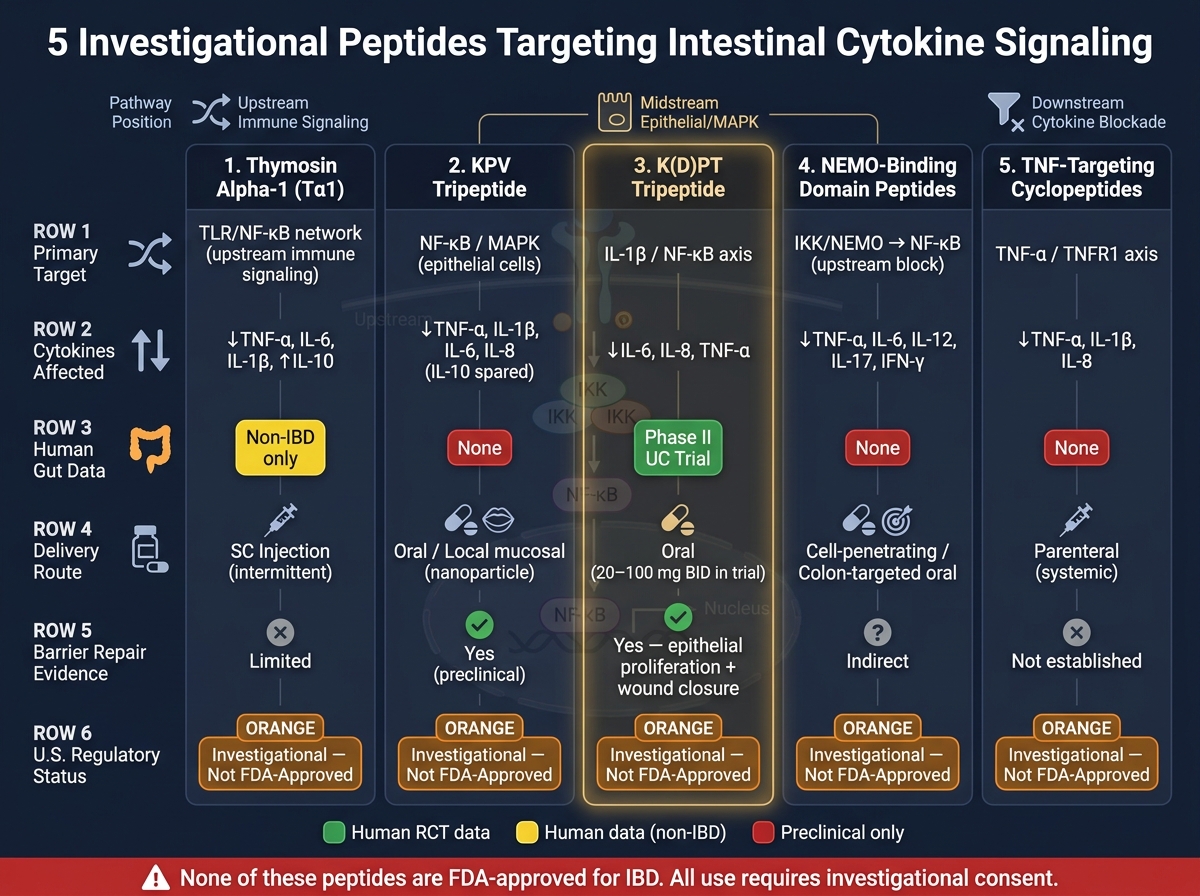
5 Investigational Peptides for IBD: Mechanism, Evidence & Status
These peptides differ in how they work, where they act in the pathway, and how much data exists behind them. In the U.S., all five are still investigational.
The big dividing line is pathway position. Some aim to tune immune activity earlier in the process. Others try to shut down NF-κB in the gut lining. And some go straight at TNF signaling.
Use the table below to see where each candidate fits in the inflammatory cascade.
| Peptide / Class | Mechanism | Primary Cytokine Pathway | Evidence Stage | Gut Outcomes | Route / Delivery Concept | U.S. Regulatory Status |
|---|---|---|---|---|---|---|
| Thymosin Alpha-1 (Tα1) | Immune-modulating thymic peptide; engages TLR2/7/9 on dendritic cells and macrophages and activates IDO-related immune tolerance | Broad cytokine modulation, including TNF-α, IL-6, and NF-κB-linked cascades | Human clinical experience in other indications; animal gut model | Prevented weight loss, improved survival, and preserved mucosal homeostasis in a murine colitis model | Systemic/parenteral; U.S. use is investigational or compounded | Not FDA-approved in the U.S.; investigational |
| KPV Tripeptide | Melanocortin-derived anti-inflammatory tripeptide; enters inflamed mucosa via PepT1 and blocks NF-κB | NF-κB suppression with downstream reductions in TNF-α, IL-6, IL-1β, and IL-8 | Preclinical only - in vitro and murine colitis models | Reduced colitis severity, preserved colon length, restored tight-junction proteins, and improved barrier function | Oral or local mucosal delivery | Research-only; no FDA-approved intestinal indication |
| K(D)PT Tripeptide | MSH-derived tripeptide that reduces inflammation-induced permeability and supports wound healing | NF-κB-linked suppression in experimental colitis models | Preclinical - DSS and IL-10-knockout murine colitis; in vitro wound healing | Attenuated acute colitis, protected epithelial barrier function, and facilitated epithelial wound healing | Oral and systemic delivery studied | Investigational/research-only; no FDA-approved gut indication |
| NEMO-Binding Domain Peptides (PTD-NBD / 8K-NBD) | Cell-penetrating IKK/NEMO inhibitors that block NF-κB activation | NF-κB | Preclinical - chronic colitis in IL-10-deficient mice; no human IBD trials | Ameliorated established chronic colitis, suppressed intestinal Th1/Th17 responses, and lowered colitis scores | Cell-penetrating delivery | Research-only; no FDA approval for intestinal use |
| TNF-Targeting Cyclopeptides and Decoy Peptides | TNF binders or receptor-interference peptides that disrupt TNF signaling | TNF-α / TNFR1 axis, with downstream NF-κB effects | Early discovery/preclinical - in vitro, animal, and computational work | Reported preclinical reductions in colitis inflammation, but intestinal benefit remains experimental | Experimental colon-targeted oral or mucosal delivery | Investigational only; no FDA-approved peptide-based TNF blocker for intestinal indications |
A simple way to read this: Tα1 sits farther upstream and appears to tune immune signaling across more than one pathway. KPV, K(D)PT, and NEMO-binding domain peptides are more centered on NF-κB, which puts them closer to the epithelial inflammatory machinery. TNF-targeting cyclopeptides and decoy peptides take the most direct route by trying to interrupt the TNF-α / TNFR1 axis itself.
That matters because pathway position can shape both upside and tradeoffs. An upstream immune modulator may affect more than one inflammatory signal. A local NF-κB blocker may be more focused on gut lining inflammation and barrier damage. A direct TNF blocker sounds straightforward, but in peptide form for intestinal use, it still sits in the early experimental stage.
Key Practice Limits Prescribers Should Know
The table covers mechanism and evidence. But in practice, a different set of limits decides whether these peptides can be used at all. The same cytokine targets - TNF-α, IL-6, IL-17, IL-10, and NF-κB - that make them appealing also make them tough to dose, standardize, and track in day-to-day care.
FDA Status and Off-Label Boundaries in the United States
None of these peptides are FDA-approved for intestinal inflammatory indications. And most are still investigational compounds, not standard off-label choices.
That distinction matters. Compounding does not change a product’s regulatory status. If a product is unapproved or compounded, it has not been reviewed by the FDA for safety, effectiveness, or quality before use. Several peptides tied to immune and intestinal signaling, including KPV, have appeared on FDA removal notices or still sit in unresolved regulatory territory. Before using any compounded version of these agents, prescribers should confirm the current Federal Register status.
Dosing, Formulation, and Delivery Uncertainty
Regulatory status is only the first hurdle. The next problem is delivery.
Human pharmacokinetic and pharmacodynamic data for these peptides are mostly missing or poorly defined. So there’s no solid basis for a standard dose, dosing schedule, or treatment length for intestinal indications. Route of administration can also change exposure and effect in a major way, especially in the enzyme-rich GI tract.
Product quality adds another layer of uncertainty. With compounded peptides, degradation, potency drift, and impurities can all change what the patient actually gets. FDA has also flagged compounded bulk peptides for aggregation, impurities, and immunogenicity concerns.
Safety Concerns: Infection, Immune Effects, and Drug Interactions
When exposure is uncertain, immune risk gets harder to judge.
Approved biologics already show that infection risk is real. These peptides do not have matching human safety data. The risk may be higher in patients already taking corticosteroids, thiopurines, JAK inhibitors, biologics, or other immunomodulators. Add an investigational peptide on top of an existing immunosuppressive regimen, and it becomes much harder to tell which agent caused benefit, side effects, or harm. Cumulative infection risk may also increase.
Before considering therapy, screen for:
- Tuberculosis
- Hepatitis B/C
- Fungal exposure history
Monitoring Markers That Matter in Practice
Symptoms alone won’t tell you enough. Start with objective markers and follow them from the beginning.
Track symptoms, weight, stool frequency, CRP, ESR when relevant, and fecal calprotectin. Fecal calprotectin values below 50 μg/g have a negative predictive value greater than 95% for ruling out active IBD, while values above 250 μg/g call for close monitoring and endoscopic evaluation in the right clinical setting.
If symptoms or biomarkers worsen, move to stool studies, endoscopy, and histology instead of empiric dose escalation. Right now, mucosal healing endpoints are the standard.
Clinical Resources for Peptide Prescribers
For clinicians putting these findings into practice, tools matter just as much as mechanism. Since these peptides are still investigational, prescribers need clear support for dosing, administration, and regulatory review.
PeptidePrescriber's monographs and dosing protocols pull together the key points: mechanism, cytokine targets, evidence limits, and current FDA status. For the peptides covered in this article, the "Immune & Inflammatory" condition hub brings together safety data and prescribing points tied to mucosal immunity and cytokine modulation.
Then comes the day-to-day work of using this in clinic. Reconstitution and unit-conversion calculators help clinicians turn pharmacy-supplied concentrations into exact injection volumes using U.S. units like mL, mg, and mcg. Step-by-step injection guides also support patient teaching and injection technique, including site selection, needle sizing, and rotation.
Regulatory status can shift fast, which means current references aren't optional. Regulatory quick references track current FDA compounding and removal notices, including the April 2026 removal notices for peptides such as KPV and BPC-157.
For clinicians who are new to peptide therapy, the platform's Starter Pack includes editable consent templates, implementation checklists, and regulatory quick references that can be worked into clinic workflows. There is also a prescriber network for peer case review in more complex cases, including questions around sequencing investigational peptides with biologics or other immunomodulators.
Conclusion
Taken together, the comparison points to three main mechanistic patterns: IL-17/IL-10 modulation, NF-κB inhibition, and TNF-targeting peptides.
Right now, K(D)PT has the strongest human signal. Tα1 is backed mostly by non-gut data. And KPV, NBD peptides, and TNF-targeting cyclopeptides are still in the preclinical stage. That line matters. None of these peptides is an established substitute for approved IBD therapies, and prescribers should say that plainly to every patient.
Mechanism is part of the story. In practice, safety and follow-up are what determine whether something is usable in a clinical setting. That means monitoring CBC, CMP, CRP, fecal calprotectin, and latent infection risk.
The other hard limit is regulatory status. Before use, verify current U.S. compounding status and document investigational consent.
The science is promising, but none of these peptides is ready for routine IBD care. Prescribers who stay grounded in current evidence, monitor with objective markers, and keep up with regulatory changes will be in the best position to use these peptides responsibly as the field develops.
FAQs
Which peptide has the strongest human data for ulcerative colitis?
Right now, no peptide has strong human clinical trial data for the treatment of ulcerative colitis.
That point matters. Some peptides, including BPC-157, have shown promising anti-inflammatory and tissue-healing effects in preclinical inflammatory bowel disease models. But preclinical results are not the same as proof in people.
In plain English: findings from lab and animal studies can point researchers in an interesting direction, but they do not confirm that a treatment works in controlled human studies.
Prescribers should keep that line clear and separate preclinical signals from high-quality human evidence.
How do these peptides differ from approved IBD biologics?
These peptides differ from approved IBD biologics in two main ways: their structure and how they may be delivered.
Peptides are shorter chains of amino acids. That shorter structure may help them bind more selectively to specific receptors. It may also lead to lower immunogenicity and more predictable metabolism.
Another big difference is delivery. Most approved IBD biologics are injectable. These peptides, by contrast, are also being studied in oral forms.
In practice, they’re usually seen as complementary immunomodulatory options, not direct replacements for current biologic treatments.
What are the biggest safety and regulatory concerns in the U.S.?
In the U.S., the main issue is the shifting regulatory status of compounded peptides. As of mid-2026, many still sit in a legal gray area, and removal from the FDA’s Category 2 list does not mean a substance can be compounded. Clinicians should keep a close eye on PCAC reviews and steer clear of substances that don’t have a clear regulatory path.
Safety is just as important. The biggest concerns include contaminants in unregulated products, use of Research Use Only items, and screening for active malignancy before prescribing growth-promoting or angiogenic peptides.