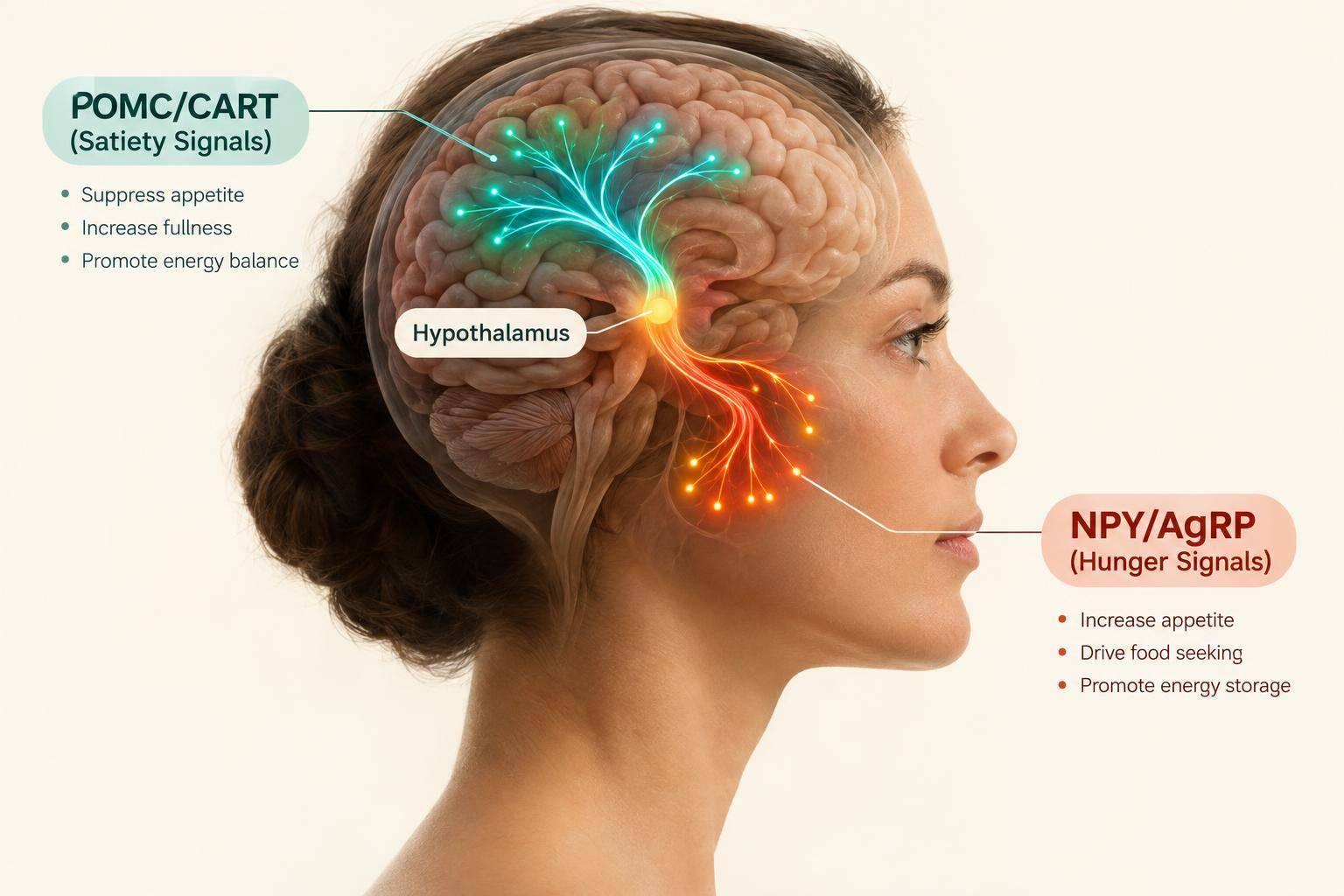
POMC/CART helps curb appetite; NPY/AgRP drives hunger. I use this distinction to explain appetite - not to choose a prescription from hunger symptoms alone. Treatment choices need to match the drug’s target, FDA labeling, and your health risks.
Here’s the short version: meals generally shift these brain signals toward satiety, while fasting shifts them toward hunger and energy conservation. After weight loss, that hunger response can make keeping weight off harder.
Quick Comparison
| Feature | POMC/CART | NPY/AgRP |
|---|---|---|
| Main signals | α-MSH and CART | NPY, AgRP, and GABA |
| Receptor effects | α-MSH activates MC3R/MC4R | NPY acts at Y1/Y5; AgRP opposes MC3R/MC4R signaling |
| Feeding effect | Reduces food intake | Promotes hunger and food seeking |
| Energy use | Supports energy expenditure | Supports energy conservation |
| Hormone inputs | Leptin and insulin support satiety signaling | Ghrelin promotes activity; leptin and insulin restrain it |
| Downstream regions | PVN and other regions | PVN, lateral hypothalamus, and other regions |
I also separate appetite reduction from <u>direct MC4R activation</u>: semaglutide and tirzepatide act through gut-hormone receptors, while setmelanotide targets MC4R for specific labeled conditions - not general obesity.
For treatment planning, I look beyond hunger to nutrition, GI symptoms, hydration, and response. For example, adult Wegovy weight-management eligibility generally starts at BMI 30, or 27 with a weight-related condition. Eligibility, contraindications, and follow-up still require product-specific review.
Hypothalamic Appetite Circuits: POMC, AgRP, and MC4R
sbb-itb-7164bd9
POMC/CART: Appetite Suppression Through Melanocortin Signaling
POMC is a precursor protein that gets cleaved into α-MSH and related peptides in the arcuate nucleus (ARC).
How α-MSH and CART Affect Feeding
α-MSH is the main melanocortin signal for satiety. CART also helps reduce feeding, though its receptor-level mechanism is less well defined.
How Leptin and Insulin Influence POMC
Leptin reflects the body’s energy stores, while insulin levels rise after meals. Both support POMC signaling, shifting ARC output toward satiety when energy is available.
For prescribing, match the therapy to its actual receptor target rather than calling it:
“POMC replacement.”
This satiety signal contrasts with the NPY/AgRP hunger pathway, which is driven by fasting.
NPY/AgRP: Hunger and Energy Conservation
NPY/AgRP neurons release NPY, AgRP, and GABA to promote feeding. During fasting, they also reduce energy expenditure, counterbalancing the satiety signals from POMC/CART.
NPY Receptors and AgRP Effects on Melanocortin Receptors
NPY stimulates feeding mainly through Y1 and Y5 receptors. AgRP blocks α-MSH at MC3R and MC4R. It can also reduce baseline melanocortin signaling.
GABA Inhibition and Effect Duration
AgRP neurons also release GABA, a nonpeptide transmitter that inhibits POMC and other satiety neurons. These signals differ in both their actions and how long their effects last.
| Signal | Main action | Timing |
|---|---|---|
| NPY | Promotes feeding through Y1 and Y5 receptors | Rapid |
| GABA | Inhibits POMC and other satiety neurons | Rapid |
| AgRP | Opposes melanocortin signaling | Longer lasting |
These differences are clearest when comparing fed and fasting states directly.
POMC/CART vs. NPY/AgRP: Pathway Comparison
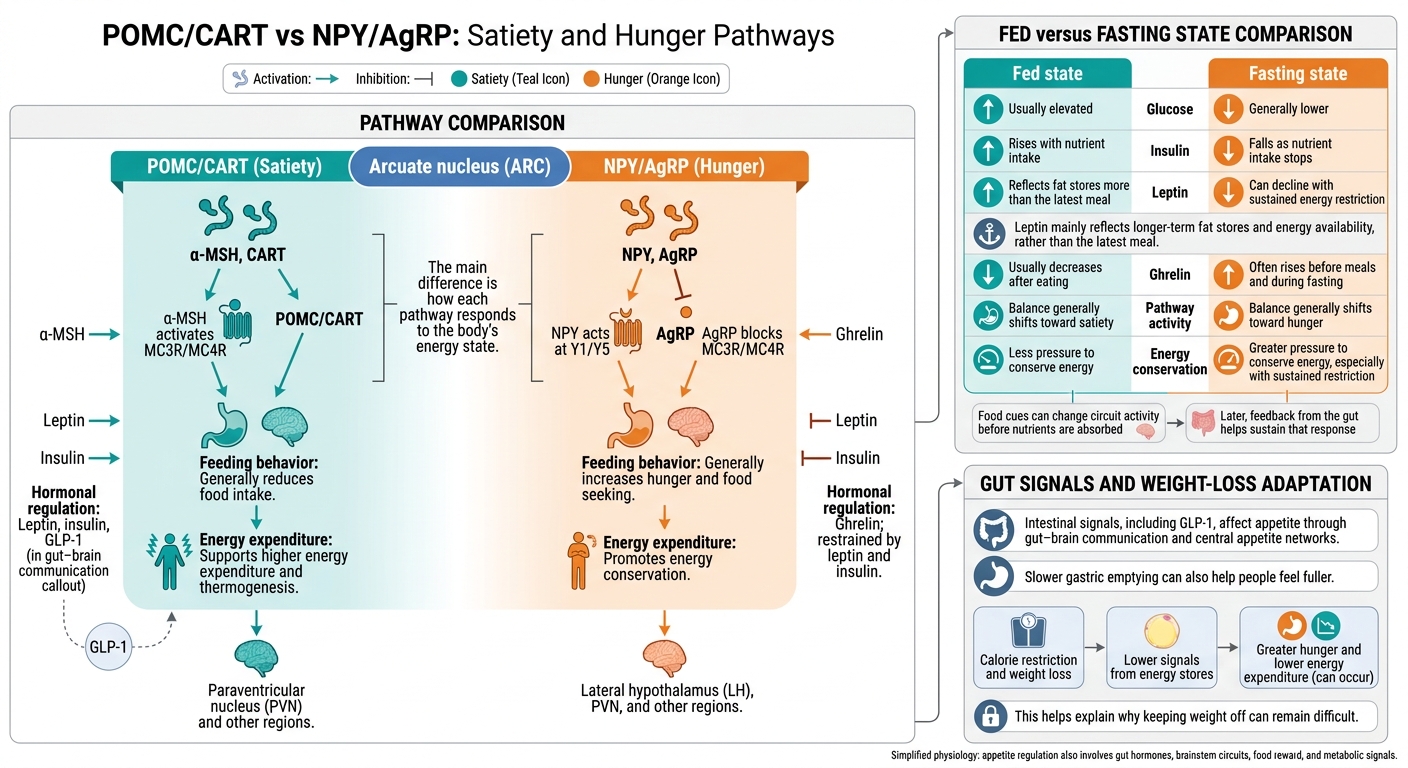
POMC/CART vs NPY/AgRP: Satiety and Hunger Pathways
Both pathways help the arcuate nucleus interpret energy needs. But they aren't mirror images: they respond differently to hormones, use different signals, and act on different downstream targets. The main difference is how each pathway responds to the body's energy state.
| Feature | POMC/CART | NPY/AgRP |
|---|---|---|
| Primary peptides | α-MSH, CART | NPY, AgRP |
| Receptors affected | α-MSH activates MC3R/MC4R | NPY acts at Y1/Y5; AgRP blocks MC3R/MC4R |
| Feeding behavior | Generally reduces food intake | Generally increases hunger and food seeking |
| Energy expenditure | Supports higher energy expenditure and thermogenesis | Promotes energy conservation |
| Hormonal regulation | Leptin, insulin, GLP-1 | Ghrelin; restrained by leptin and insulin |
| Downstream integration | Paraventricular nucleus (PVN) and other regions | Lateral hypothalamus (LH), PVN, and other regions |
This balance matters when choosing therapies to curb hunger or support satiety based on patient selection criteria.
Appetite Signals During Feeding and Fasting
Signals from meals and energy stores work on different timelines. Insulin rises as nutrients enter the body. Leptin mainly reflects longer-term fat stores and energy availability, rather than the latest meal.
| Signal or response | Fed state | Fasting state |
|---|---|---|
| Glucose | Usually elevated | Generally lower |
| Insulin | Rises with nutrient intake | Falls as nutrient intake stops |
| Leptin | Reflects fat stores more than the latest meal | Can decline with sustained energy restriction |
| Ghrelin | Usually decreases after eating | Often rises before meals and during fasting |
| Pathway activity | Balance generally shifts toward satiety | Balance generally shifts toward hunger |
| Energy conservation | Less pressure to conserve energy | Greater pressure to conserve energy, especially with sustained restriction |
Food cues can change circuit activity before nutrients are absorbed. Seeing or anticipating food may start shifting hunger signals. Later, feedback from the gut helps sustain that response.
Gut Signals and Hunger After Weight Loss
Intestinal signals, including GLP-1, affect appetite through gut–brain communication and central appetite networks. Slower gastric emptying can also help people feel fuller.
During calorie restriction and after weight loss, lower signals from energy stores can push the body toward greater hunger and lower energy expenditure. This helps explain why keeping weight off can remain difficult - and why the dominant appetite signal matters when matching a therapy to a person's needs.
Applying Appetite Physiology to Peptide Therapy Decisions
Not every appetite signal points to a supported treatment target. Use pathway knowledge to match treatment to an indication - not to determine eligibility. Assess appetite, weight-related conditions, and patient-specific risks. Then review prescribing information and clinical evidence. Document whether use is on-label, off-label, compounded, or investigational, keeping these categories separate.
Matching Treatment Goals to Supported Mechanisms
Choose therapies based on supported targets and labeled uses. Satiety effects differ from direct melanocortin activation. Strong hunger or suspected low POMC activity alone does not establish eligibility.
| Therapy | Mechanism and treatment goal | Use and eligibility | Key limitations |
|---|---|---|---|
| Semaglutide | Supports satiety and reduces hunger and cravings | Wegovy: chronic weight management under its labeling; adult eligibility generally includes BMI ≥30, or ≥27 with a weight-related comorbidity. Ozempic has separate diabetes-related labeling. | Follow product-specific indications. Gastrointestinal intolerance and weight regain after discontinuation affect treatment planning. |
| Tirzepatide | GIP/GLP-1 receptor activation supports appetite reduction and metabolic effects | Zepbound: labeled weight management and moderate-to-severe obstructive sleep apnea in adults with obesity. Mounjaro has separate diabetes labeling. | Requires contraindication screening, gradual titration, and regular tolerability checks. |
| Setmelanotide | Direct MC4R agonism reduces hunger | Limited to specific genetic obesity syndromes under U.S. labeling; confirm the required diagnosis. | Not for general obesity; appetite symptoms alone do not qualify. |
Once treatment begins, track tolerability and response rather than increasing the dose based on hunger alone.
Monitoring Response and Documenting Care
Before GLP-1-related treatment, screen for contraindications, including a personal or family history of medullary thyroid carcinoma or MEN2. At follow-up, assess appetite, nutritional intake, weight in clearly labeled lb or kg, gastrointestinal symptoms, and hydration. Evaluate treatment-specific risks, including gallbladder disease, pancreatitis, and dehydration-related kidney injury.
Document the treatment rationale, product status, consent, dosing, titration, and follow-up plan. Check tolerability at week 1 and response at 8–12 weeks. Excessive hunger, inadequate intake, or intolerance calls for review - not automatic dose escalation.
PeptidePrescriber Resources for Clinicians
PeptidePrescriber offers licensed prescribers monographs, dosing protocols, calculators, injection guides, and regulatory references to support prescribing decisions.
Conclusion: Pathway Differences and Clinical Limits
POMC/CART suppress appetite; NPY/AgRP drive hunger. Fasting shifts that balance toward orexigenic, or hunger-promoting, signaling. This framework explains which way appetite shifts, but not the full biology of eating.
Appetite regulation reaches beyond the arcuate nucleus. Gut hormones, brainstem circuits, food reward, and metabolic signals also shape eating. A peptide therapy doesn’t replace a single appetite circuit. Its receptor target, duration of action, and peripheral effects determine its clinical effect.
When making treatment decisions, understanding a mechanism is not the same as proving a benefit. Animal models help explain how a treatment works, but they do not establish treatment benefits for general human obesity. Base claims on human trial evidence and FDA labeling, and assess hunger alongside food intake, metabolic response, and adverse effects.
FAQs
Can leptin resistance make me feel hungry?
Yes. Leptin normally tells your brain to curb appetite and keep energy intake and use in balance. With leptin resistance, your brain doesn’t respond properly to those signals - even when leptin levels are high. As a result, you may still feel hungry and find it harder to manage your weight.
Leptin resistance also often occurs alongside metabolic issues, such as insulin resistance. Together, these issues can further disrupt how your body regulates feelings of fullness.
Can appetite signaling be tested?
No validated, routine clinical test currently measures central appetite signaling directly. Research tools exist, but they haven’t been standardized for clinical use.
Appetite regulation involves peripheral hormones and pathways in the hypothalamus, including NPY/AgRP and POMC/CART. Feeling full in the short term doesn’t always reflect long-term changes in weight or metabolism. Clinicians therefore can’t yet reliably predict individual responses or measure how sensitive brain-level signaling is in a standard office setting.
Does persistent hunger mean my medication isn't working?
Not necessarily. Obesity is a chronic condition, and the body can push back against weight loss. Hunger hormones like ghrelin increase, fullness signals like leptin and insulin decrease, and resting metabolism can slow.
These medications help manage the condition over the long term; they don’t permanently change metabolism. Appetite signals can rebound if the underlying metabolic dysregulation - disruptions in how the body controls appetite and metabolism - isn’t addressed over time.